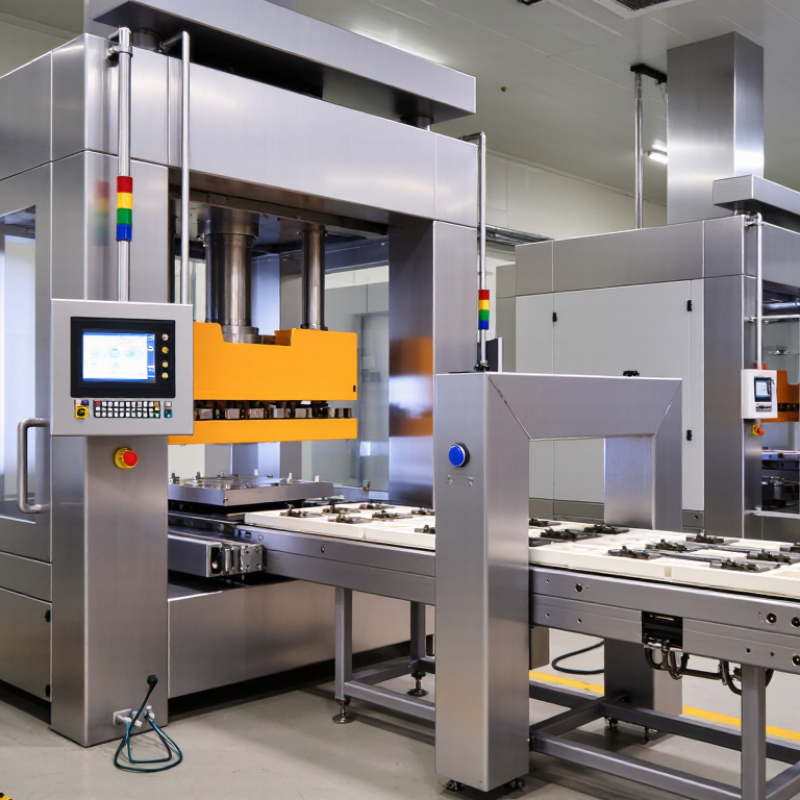
Choosing the right Powder Pressing Machine in 2026 requires more than comparing price tags and advertised tonnage. A reliable purchase begins with the material, product shape, required density, and expected production volume. Ceramic powders, metal compounds, pharmaceutical excipients, and industrial materials can behave very differently under pressure. The machine must match the application.
Small details matter. A rigid frame reduces vibration during compression. Accurate pressure control protects consistency from batch to batch. A clear mold-changing process can save hours each week. Buyers should also inspect safety guards, emergency stops, calibration records, and service access before approving a supplier. Ask for test pressing with your actual powder. Sample results reveal more than polished brochures.
Real-world performance is rarely perfect. Some machines need longer dwell times than expected. Others produce excellent first samples but struggle during continuous operation. This is where practical experience becomes valuable. Review maintenance logs, operator feedback, spare-parts availability, and warranty terms. Independent technical data is more trustworthy than vague claims.
Do not ignore energy use.
The best machine is not always the fastest one. It should deliver stable results, manageable operating costs, and dependable support over years of use. This guide evaluates key specifications, machine types, automation options, tooling compatibility, and supplier credibility. It also highlights common buying mistakes, because even experienced teams can overlook cleaning time, floor space, or future capacity. Careful comparison creates a safer, more informed investment.
A powder pressing machine compacts loose powder inside a rigid die. The pressure forms a temporary part called a green compact. It may later require sintering, drying, or another controlled treatment. Common materials include metal, ceramic, graphite, and selected composite powders. The machine does not simply “squeeze powder.” It controls filling, compression, ejection, and density distribution. Pressure is only half.
Grand View Research reported that the global powder metallurgy market was valued at approximately USD 3.2 billion in 2023, with continued growth expected through 2030. This expansion increases demand for stable pressing equipment in automotive, electronics, energy, and industrial production. MPIF technical guidance also emphasizes powder flow, tooling alignment, lubrication, and green-part strength. These details often decide whether a machine performs reliably.
When comparing a 2026 model, examine force range, stroke accuracy, filling depth, cycle speed, and control repeatability. Hydraulic systems suit high-force forming, while servo-driven systems can provide finer motion control. A larger press is not automatically better. Excessive force may damage tooling or create density gradients. I would test several powder batches before purchasing. Laboratory results can look perfect, yet shop-floor humidity may change flow behavior. Ask for recorded density variation, ejection-force data, maintenance intervals, and operator training requirements. A useful machine should produce consistent parts, not impressive specifications alone.
A powder pressing machine turns loose powder into a controlled “green” compact. The process starts with die filling. A measured charge enters a polished cavity, while sensors monitor fill height and material flow. Upper and lower punches then compress the powder from opposite directions. Pressure rearranges particles, reduces air gaps, and creates temporary mechanical strength.
Pressure is not the only concern. Dwell time matters. The powder must settle under force before the punches release. Uneven density can cause cracks, soft edges, or distortion during later sintering. Operators often adjust filling speed, lubricant levels, punch movement, and ejection force. Small changes can produce large differences. That is easy to underestimate.
Grand View Research’s 2024 Powder Metallurgy Market report projects approximately 7% annual growth through 2030, increasing demand for repeatable compaction systems. Data Bridge Market Research also identifies automation and process monitoring as major market drivers. These trends reflect a practical reality: consistency is more valuable than maximum pressing force. A reliable machine records pressure curves, detects abnormal ejection resistance, and maintains stable cycle timing. Still, sensors do not replace experience. Powder moisture, particle shape, and die wear can quietly change results. My own buying rule would be simple: test the actual powder before trusting impressive specifications.
2026 Best Powder Pressing Machine Buying Guide: Key Types of Powder Pressing Machines
Choosing a powder pressing machine starts with the material, not the catalog photograph. Mechanical presses suit stable powders and high-volume parts, using fast crank-driven motion. Hydraulic presses provide adjustable pressure and longer dwell time, which helps with dense or fragile shapes. Servo-electric presses offer programmable movement and lower fluid-maintenance needs. They cost more upfront.
Rotary tablet presses support continuous production and consistent dosing for compact, uniform products. Single-action systems work well for simpler geometries, while double-action designs improve density distribution through independent punch movement. For demanding technical ceramics or metal components, isostatic pressing applies pressure more evenly around the powder. It may deliver better green density, but cycle times and tooling requirements can be less forgiving.
A 2024 Grand View Research analysis estimated the global powder metallurgy market at over USD 2 billion, with continued growth through 2030. A MarketsandMarkets report also identified automation and digital process control as major development factors. These figures do not guarantee a return on every machine. Test the actual powder first. Measure fill variation, ejection force, density gradients, and tooling wear. A small lab press can reveal problems before a production purchase. I would not trust pressure capacity alone; a powerful machine can still produce weak edges or inconsistent corners. Check real cycle data, not only the brochure.
2026 Best Powder Pressing Machine Buying Guide
How to Choose the Right Powder Pressing Machine
Choosing a powder pressing machine starts with the material, not the machine’s advertised force. Identify particle size, moisture level, flowability, and sensitivity to heat. These details affect filling accuracy and final density. A stable laboratory test can reveal problems before production begins. Measure compression force, cycle time, tablet weight, and dimensional variation. Keep the records.
Match the machine’s pressure range to your required product strength. Excessive force may damage tooling or create difficult ejection. Insufficient force can produce weak, uneven parts. Ask for a controlled trial using your actual powder. Examine the results under normal operating conditions. A polished sample may hide inconsistent feeding. That matters.
Review tooling access, adjustment accuracy, dust control, and operator safety. The frame should resist vibration during repeated cycles. Check whether worn punches and dies can be replaced without long downtime. Confirm that guards, emergency stops, and electrical systems meet applicable local requirements. Maintenance access is often overlooked. It should not be.
A higher tonnage rating is not automatically better. It may increase cost, energy use, and mechanical stress. Consider production volume, floor space, noise, and future material changes. A thoughtful supplier should provide clear specifications, test data, training details, and service terms. Still, do not accept every figure without verification. Real powder can behave differently from a catalog sample.
| Buying Dimension | Recommended Range or Specification | Why It Matters | Best Fit | Key Check Before Purchase |
|---|---|---|---|---|
| Production Capacity | Small batch: 5–30 kg/h Medium production: 30–150 kg/h High production: 150 kg/h or more | The required output determines machine size, automation level, feeder design, and overall investment. | Laboratories, pilot plants, contract manufacturers, and continuous production lines. | Confirm capacity using the actual powder, target tablet weight, operating speed, and required quality level. |
| Compression Force | Approximately 20–100 kN for light-duty applications 100–300 kN for general industrial use 300 kN or more for high-density products | Higher force can improve density and mechanical strength, but excessive force may cause capping, sticking, or tooling wear. | Powder tablets, pellets, briquettes, ceramic parts, and industrial compacts. | Select force according to powder compressibility, product dimensions, target density, and safety margin. |
| Machine Type | Single-station, rotary, or hydraulic powder press | Each design offers a different balance of flexibility, output, force control, and operating complexity. | Single-station: development and small batches. Rotary: high-volume tablet production. Hydraulic: high-force or customized forming. | Check whether the machine supports the required product shape, tooling configuration, and production cycle. |
| Powder Characteristics | Evaluate particle size, moisture, bulk density, flowability, abrasiveness, and cohesiveness. | Powder behavior affects die filling, weight variation, compression stability, dust generation, and ejection performance. | All applications, especially powders with poor flow or high sensitivity to moisture. | Request a material trial using the production powder rather than relying only on general capacity data. |
| Tablet or Compact Size | Typical diameter: 3–50 mm Typical thickness: 1–25 mm, depending on tooling and material | The die diameter, punch length, filling depth, and compression zone must match the final product dimensions. | Small tablets, industrial pucks, catalyst compacts, and customized shapes. | Confirm maximum diameter, thickness, weight range, shape tolerance, and availability of compatible tooling. |
| Weight Accuracy | Common target: approximately ±1–3% for general products; tighter tolerances require controlled feeding and process validation. | Consistent weight supports product uniformity, material efficiency, and downstream packaging or assembly. | Applications requiring repeatable dimensions and controlled material usage. | Ask for test data at the intended speed and verify the adjustment method for fill depth and feed rate. |
| Operating Speed | Low-speed presses: up to about 30 cycles/min Medium-speed presses: 30–100 cycles/min High-speed rotary presses: 100 cycles/min or more | Higher speed increases output, but may reduce dwell time and make powder-flow or ejection problems more difficult to control. | Choose speed based on product quality requirements, not output alone. | Check rated speed, practical production speed, dwell time, vibration, noise, and quality results at the target rate. |
| Feeding System | Gravity feeder, paddle feeder, forced feeder, or screw-based feeding system | The feeder controls die filling consistency and is especially important for low-flow, cohesive, or segregating powders. | Gravity systems suit free-flowing powders; forced systems suit difficult-to-feed materials and higher output. | Check feeder compatibility, cleaning access, powder residence time, and risk of segregation. |
| Control System | Manual, semi-automatic, or PLC/HMI-controlled operation with recipe storage and alarms | Modern controls improve repeatability, changeover efficiency, monitoring, and operator safety. | Manual systems suit development; automated controls suit repeat production and multi-shift operation. | Verify language options, data recording, password control, alarm history, and integration with plant systems. |
| Tooling Material and Life | Hardened tool steel for general use; carbide or coated tooling for highly abrasive powders. | Tool selection affects wear rate, dimensional stability, maintenance cost, and surface finish. | Standard powders, abrasive minerals, ceramics, and high-cycle production. | Confirm hardness, coating options, expected service life, replacement lead time, and tooling tolerances. |
| Dust Control | Enclosed compression area with local extraction; filtration must match the powder hazard and particle size. | Dust control protects operators, reduces contamination, improves housekeeping, and may be essential for combustible powders. | Fine powders, dusty materials, and facilities with strict occupational hygiene requirements. | Assess extraction airflow, enclosure sealing, filter compatibility, grounding, and applicable hazardous-area requirements. |
| Cleaning and Changeover | Tool-free or quick-release parts, accessible product-contact surfaces, and clearly defined cleaning procedures. | Fast, thorough cleaning reduces downtime and lowers the risk of cross-contamination between materials. | Multi-product facilities, short production runs, and applications with strict cleanliness requirements. | Measure actual changeover time and inspect corners, seals, feeder areas, and powder collection points. |
| Power and Installation | Electrical supply commonly ranges from 220–480 V, three-phase, depending on machine size and local standards. | Utilities, floor loading, clearance, ventilation, and compressed-air requirements affect installation cost and schedule. | Workshops, laboratories, and industrial production areas. | Request a complete utility list, machine footprint, shipping weight, access requirements, and commissioning plan. |
| Safety Features | Interlocked guards, emergency stops, overload protection, pressure monitoring, and safe access for maintenance. | Safety systems reduce the risk of crushing injuries, unexpected starts, tooling failure, and uncontrolled pressure release. | Every installation, with additional controls for combustible, toxic, or abrasive powders. | Review risk assessment documents, guarding design, emergency-stop locations, and compliance with local regulations. |
| Maintenance Requirements | Routine inspection of punches, dies, seals, lubrication points, drive components, sensors, and feeder parts. | Preventive maintenance helps preserve compression accuracy, reduce unplanned downtime, and extend tooling life. | Facilities with defined maintenance schedules and trained operators. | Ask for maintenance intervals, spare-parts lists, lubrication specifications, service access, and technical documentation. |
| Total Cost of Ownership | Evaluate purchase price together with tooling, energy, labor, extraction, maintenance, spare parts, validation, and downtime. | A lower initial price may lead to higher long-term costs if the machine has limited output, difficult cleaning, or expensive tooling. | All buyers, particularly operations planning multi-year production. | Compare cost per acceptable compact, expected uptime, energy consumption, consumables, and service availability. |

Installing a powder pressing machine begins with a stable, level foundation. Check floor capacity before delivery, because vibration can damage accuracy over time. Leave space around the frame for cleaning and tool changes. Connect power, grounding, compressed air, and hydraulic lines according to the equipment manual. Keep cables away from moving parts. A qualified technician should verify alignment, guarding, and emergency stops before production starts. I have learned that rushed leveling creates problems later.
During operation, use a consistent powder feed and confirm the correct tooling position. Adjust fill depth, pressing force, and dwell time gradually. Record each change. Small adjustments matter. Watch the first pieces for cracks, uneven density, sticking, or abnormal ejection. Stop the machine if noise, heat, or vibration changes suddenly. Operators should never reach into the die area during automatic cycling. A clear operating checklist helps, although checklists can become outdated when settings change.
Maintenance should combine daily cleaning with scheduled inspections. Remove loose powder from the die, guides, sensors, and surrounding surfaces using approved methods. Inspect seals, fasteners, lubrication points, and tooling edges for wear. Excess lubricant can attract powder and create another fault. Check pressure readings against known reference values, not memory. Keep maintenance logs with dates, measurements, and replaced parts. Before servicing, isolate energy sources and confirm zero movement. I still recommend reviewing the manual after installation, because practical assumptions are sometimes wrong.