

Why Choose Front Motorcycle Spoke Wheels?

A front wheel does more than carry the motorcycle’s weight. It helps guide the bike through a turn, supports braking forces, and shapes the feel of the road beneath the handlebars. That is why choosing a Front Motorcycle Spoke Wheel deserves more thought than simply matching its diameter. The hub, rim, spoke pattern, brake setup, and tire compatibility all matter. A wheel that looks right may still be unsuitable for a particular model.

Spoke wheels are valued for their classic appearance and their ability to handle varied riding conditions. Their flexible construction can help absorb some impacts from rough pavement or gravel, while individual spokes can often be adjusted or replaced. Those qualities can be useful on touring, dual-sport, and vintage motorcycles. But spoke wheels need inspection. Check for loose or damaged spokes, rim runout, and signs of corrosion; a small rattle or wobble should not be ignored. Some designs also require tube-type tires, though compatibility depends on the wheel and manufacturer.

There is a trade-off. Spokes can require more cleaning and maintenance than many cast wheels, and repairs should be performed with the right tools and specifications. Not every rider needs that extra care. Before buying, compare the wheel with the motorcycle’s service manual and confirm fitment with a knowledgeable technician or reputable supplier. Think about your routes, maintenance habits, and braking system. A careful choice matters. So does an honest look at how you ride.
Why Choose Front Motorcycle Spoke Wheels?

What Front Motorcycle Spoke Wheels Are and How They Are Built

Why Choose Front Motorcycle Spoke Wheels?
What Front Motorcycle Spoke Wheels Are and How They Are Built

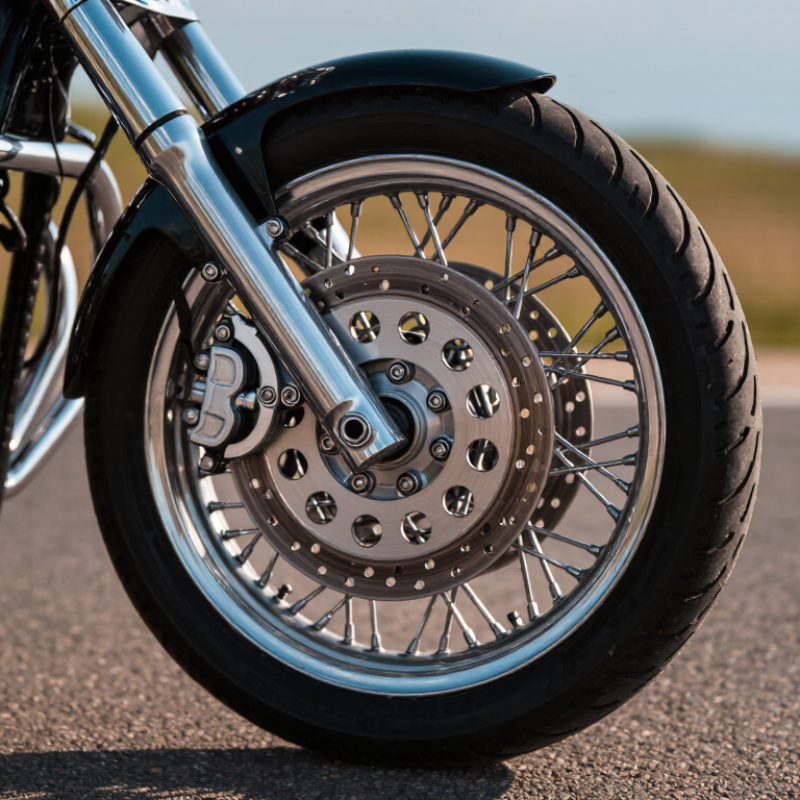
A front motorcycle spoke wheel is built from a central hub, a metal rim, and individual spokes connecting them. Unlike a solid cast wheel, its spoke structure can flex slightly when the tire meets rough ground. That movement may help absorb sharp impacts, but it does not guarantee a softer ride. Strength and weight depend on the materials, rim dimensions, spoke count, and quality of assembly. The front wheel also needs to remain straight and stable under braking and cornering loads.

During assembly, spokes pass through holes in the hub flange and rim. Small threaded nipples secure each spoke and let a builder adjust its tension. Spokes usually cross in a set pattern, helping transfer forces between the rim and hub. Tension must be even. Too much variation can lead to a wobbly rim, loose spokes, or faster wear. Some rims need an inner tube; others are specifically designed for tubeless tires. The difference matters when choosing a replacement tire or wheel.

Tips: Check your wheel type before tire changes. After a hard impact, inspect the rim and spokes. A tap test can flag a dull spoke, but it cannot replace a proper inspection.

How Spokes Distribute Loads and Support Wheel Flex

A front motorcycle spoke wheel works as a tensioned network between the hub and rim. When the tire meets a pothole or rough patch, the rim moves slightly and spoke tensions change. Neighboring spokes help share the force instead of leaving one small area to carry it alone. The effect depends on even, suitable tension; loose or damaged spokes can disturb the wheel’s stability.

That matters. A little compliance can help the wheel tolerate sharp impacts, while the tire and suspension handle most of the ride’s cushioning. Spokes also support side loads during cornering and braking, helping keep the rim aligned with the hub. Their pattern and tension influence how the wheel responds, so “flexible” does not automatically mean better. Too much movement may point to poor adjustment, fatigue, or damage.

A useful check is to look for a visibly uneven rim, loose spokes, or unusual changes in sound when spokes are lightly tapped. These signs are not a substitute for proper inspection, but they can flag a problem early. Spoke wheels need attention. That maintenance is easy to overlook, especially when the wheel still appears straight.

Key Benefits for Durability, Impact Absorption, and Repairability

Front motorcycle spoke wheels combine a central hub, individual spokes, and a rim that can flex slightly under load. That flexibility helps absorb sharp impacts from potholes and rough gravel. The ride may feel less harsh over broken pavement, though tire pressure and suspension settings matter too. Spokes are not a cure-all.

Durability comes from how the load is shared across many spokes rather than one solid structure. A properly tensioned wheel can handle repeated bumps, but loose or damaged spokes should not be ignored. Look for uneven tension, a wobbling rim, or new clicking sounds after a hard impact. Small changes matter.

Repairability is another practical advantage. If a spoke bends or breaks, a mechanic can often replace and retension it without replacing the entire wheel. A badly dented rim or neglected spoke damage may still require more extensive work. That part is easy to underestimate. Regular inspection takes time, and spoke wheels can need truing to keep the rim running straight. For riders who travel on uneven roads, this serviceable design can be useful, provided maintenance is part of the ownership routine.

Why Choose Front Motorcycle Spoke Wheels? Key Benefits for Durability, Impact Absorption, and Repairability

Dimension How a Spoke Front Wheel Works Practical Benefit Important Consideration
Impact absorption The rim, hub, and tensioned spokes form a flexible wheel structure that can deflect slightly under impacts. That compliance can help the wheel cope with uneven surfaces and repeated bumps, which is useful on rough roads and trails. Spokes do not prevent damage. A severe impact can bend the rim, damage spokes, or affect wheel alignment.
Durability under rough use Loads are distributed through multiple spokes between the hub and rim rather than through a single solid wheel structure. Individual spoke tension can be checked and adjusted, supporting ongoing maintenance and wheel truing. Spoke tension should be inspected periodically; loose, damaged, or unevenly tensioned spokes can compromise wheel condition.
Repairability Depending on the wheel design and extent of damage, individual spokes and some rim components may be replaceable. Some localized spoke damage can be addressed without replacing the entire wheel, subject to inspection and repair availability. A badly bent or cracked rim, damaged hub, or compromised wheel may require specialist repair or replacement. Repairs should be checked for true and correct spoke tension.
Comparison with cast wheels Spoke wheels use separate tensioned components; cast wheels are made as a single wheel structure. Spoke construction offers serviceable components and flexibility that can suit motorcycles used on rough terrain. Cast wheels generally require less spoke-related maintenance. A damaged cast wheel may need replacement rather than component-level repair.
Tire and tube setup Many traditional spoke wheels use inner tubes because spoke holes pass through the rim bed. A tube-type setup can be practical where the motorcycle and wheel are designed for it. Some spoke wheels are designed for tubeless use, but compatibility depends on the wheel’s construction and manufacturer specifications. Do not assume a spoke wheel is tubeless-ready.
Routine care Spokes, nipples, rim condition, and wheel alignment can be inspected as part of regular maintenance. Inspection can help identify loose or damaged components before they lead to more extensive wheel problems. Follow the motorcycle service manual for inspection intervals and adjustment procedures; use a qualified technician when needed.
Best-suited use Commonly selected for motorcycles intended for adventure riding, off-road use, or surfaces with frequent impacts. The combination of compliance and serviceable components can be advantageous when riding conditions are demanding. Wheel choice should also account for the motorcycle’s intended use, load limits, tire compatibility, and manufacturer recommendations.

Note: Wheel construction, service requirements, and repair options vary by motorcycle and wheel design. Always consult the owner’s manual or a qualified motorcycle technician before riding with a damaged or altered wheel.

How Spoke Wheels Perform Across Different Riding Conditions

Why Choose Front Motorcycle Spoke Wheels?
How Spoke Wheels Perform Across Different Riding Conditions

Front spoke wheels are popular with riders who move between paved roads and rough tracks. Their spoke-and-rim construction can flex slightly over sharp bumps, helping manage impacts from potholes, stones, and rutted gravel. That does not make them damage-proof. A hard hit can still bend a rim or loosen spokes. On smooth asphalt, a well-built cast wheel may feel just as steady; tire choice, suspension setup, and wheel condition matter more than appearance.

Wet-road grip comes from the tire’s contact with the surface, not from spokes themselves. Keep tire pressure correct and inspect the wheel regularly. The U.S. National Highway Traffic Safety Administration reported 6,218 motorcyclist fatalities in its 2022 Traffic Safety Facts. That report does not compare wheel designs, but it is a reminder that maintenance and careful riding deserve attention. Spoked wheels can need periodic tension checks, and some use tube-type tires, which may take longer to repair after a puncture. A small inconvenience, perhaps.

Tips: Before a rough ride, check for loose or damaged spokes and inspect the rim for dents. If you hear a new metallic rattle, stop and investigate before continuing.

Why Choose Front Motorcycle Spoke Wheels?

A qualitative comparison of spoke and cast front wheels across common riding conditions.

How to read this: Higher scores indicate a stronger general fit for that condition, not measured test results. Spoke wheels can flex and are often easier to repair, while cast wheels are typically rigid and require less maintenance. Actual performance depends on wheel design, materials, tires, and setup.

Maintenance Needs and Compatibility Considerations

Why Choose Front Motorcycle Spoke Wheels?

Maintenance Needs and Compatibility Considerations

Front spoke wheels suit riders who value a repairable, adaptable wheel setup. Their spokes can be adjusted, but they need regular inspection. Check for loose spokes, cracked nipples, corrosion, and rim damage. A dull tap can reveal a spoke that sounds different from its neighbors, though sound alone cannot confirm wheel condition. Check rim runout too. A clean wheel can still be out of true. Follow the motorcycle’s service manual for tension and torque specifications, or ask a qualified technician when unsure.

Compatibility deserves equal attention. Match the wheel’s diameter, hub width, axle size, and brake-disc mounting points to the motorcycle. Confirm clearance around the fork, fender, and brake caliper. Tire width and profile must also suit the rim and the motorcycle’s specifications. If the wheel uses a speed sensor or ABS ring, verify its position and fit before installation. Small measurements matter. A wheel that looks right may not align correctly.

Tips: After wet or muddy rides, rinse gently and dry the spokes, nipples, and hub. Avoid aiming high-pressure water directly at bearings. Check spoke tension and wheel alignment at the intervals recommended in the service manual, and after a hard impact. Keep a note of repeated loose spokes; that pattern may point to a deeper wheel issue.