How to Choose a Professional Kart in 2026?
Choosing a Professional Kart in 2026 is less about finding the fastest-looking machine and more about matching its design to the driver, track, and intended use. A low seat, responsive steering, and firm chassis may feel impressive during a short test, yet become tiring over a full session. Fit matters. Start with the driver’s height, weight, and experience, then compare suitable kart classes and current manufacturer specifications. Check that the seat supports the body without restricting movement, and that the pedals and steering wheel feel comfortable from the driving position.
Look closely at the practical details. Inspect the frame for visible damage, check brake components, and ask how often routine parts need replacement. Confirm that spares and service support are available where you plan to drive. Engine type, gearing, and tire choice also affect performance, but their value depends on the circuit and the kart’s setup. A knowledgeable mechanic or experienced coach can help interpret these trade-offs; a glossy specification sheet cannot tell you how a kart will feel in your hands.
There is no universally perfect choice. A kart that suits one driver may feel nervous or cumbersome to another, and even a well-built model can need adjustments. If possible, arrange a supervised test in conditions similar to your regular sessions. Take notes on braking, corner entry, vibration, and comfort after several laps. Then compare those observations with the seller’s maintenance records and stated specifications. The best Professional Kart is not simply the one with the boldest claims. It is the one whose fit, condition, support, and performance make sense for your needs—and whose compromises you understand.
Understanding What Defines a Professional Kart
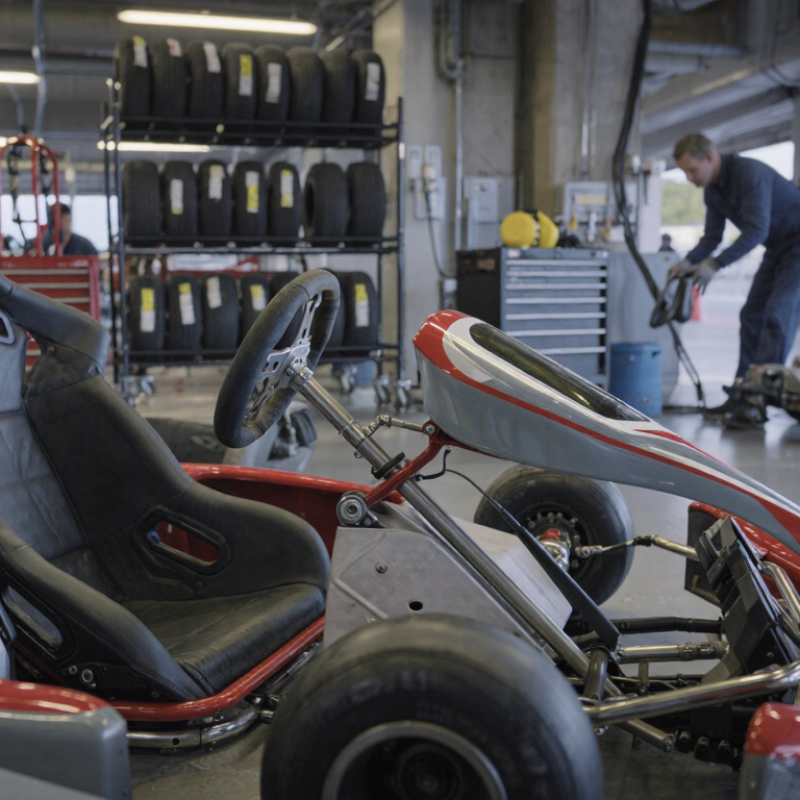
A professional kart is defined by controlled performance, not simply a large engine or high top speed. Its chassis, brakes, steering, and seat must work as a balanced system. A sound frame should respond predictably through a corner, without sudden flex or vague steering. Small details matter. Check for cracks near welds, smooth pedal travel, secure bearings, and brake pressure that feels consistent. Fit matters, too: the driver should reach the pedals comfortably and brace against the seat without twisting.
Technical limits provide a useful reference. FIA Karting’s Technical Regulations set a maximum overall width of 1,400 mm for covered international categories; exact requirements depend on the class.
That figure helps explain why a professional kart is designed around regulated dimensions, tested components, and repeatable setup—not improvised parts. Ask for the chassis documentation and maintenance record, then inspect the kart cold, before a test session. A straight axle and even tire wear can reveal more than polished bodywork. I would still treat paperwork as evidence, not proof: a well-presented kart may hide tired bearings or inconsistent braking. Listen for roughness when rotating the wheels, and check that the steering returns freely. A stopwatch is useful. So is a careful inspection.
Matching the Kart to Your Racing Discipline and Track
A professional kart should suit the discipline, not just look fast in a workshop. Sprint racing rewards quick response through tight corners, so chassis stiffness, steering feel, and gearing matter. On a short circuit with frequent hairpins, a kart that changes direction cleanly can be more useful than one built for maximum straight-line speed. Small differences show up quickly.
Endurance racing asks for a different balance. A stable kart can reduce fatigue over long stints, while a comfortable seat and predictable handling help drivers stay consistent. Consider how easily the kart can be adjusted between drivers, too. A setup that feels perfect for ten laps may become tiring after an hour. I used to underestimate that part.
Track conditions should guide the choice as much as the race format. Smooth asphalt may suit a firmer setup, while bumps and changing grip call for compliance and careful tuning. Tight, technical tracks favor acceleration and rotation; faster layouts place greater emphasis on stability and gearing. Ask experienced local racers about typical conditions, then confirm advice with measured testing. Track reputation can be misleading. Record tire wear, lap times, and handling changes during practice, and adjust one variable at a time. A kart is only a good match when its setup works for your discipline, track, and driving style.
Comparing Chassis Design, Materials, and Adjustability
A professional kart should suit the driver, track, and racing conditions—not just look substantial. Chassis geometry affects how weight moves through corners. A narrow front track can make turn-in feel sharper, while a wider setting may calm the kart on a fast, flowing circuit. Too much stiffness can reduce grip on uneven surfaces. Feel matters.
Most kart frames use steel tubing, but material labels alone reveal little about performance. Tube dimensions, wall thickness, weld consistency, and heat treatment all influence strength and flex. Inspect joints closely for uneven welds or signs of damage. A lighter frame may help responsiveness, yet durability and predictable handling matter more than low weight alone. It is easy to overvalue a specification sheet.
Adjustability lets a driver tune the chassis as conditions change. Check whether the kart allows practical changes to front track, caster, seat position, ride height, and axle choice. Those adjustments should be secure and repeatable, not fiddly between sessions. Make one change at a time, then record tire pressures, track conditions, and driver feedback. I still find this easy to misjudge: a setup that feels quick for one lap may become tiring over a longer run. Test the kart on familiar ground before committing.
How to Choose a Professional Kart in 2026?
Typical material properties to consider when comparing kart chassis materials
How to read this: Lower density means less material mass for the same volume, while elastic modulus describes a material’s stiffness. Chassis flex also depends on tube dimensions, frame layout, and joints—not material alone. When comparing karts, check practical adjustment options such as seat position, axle setup, and front-end geometry. Values shown are typical reference figures; exact properties vary by grade and specification.
Choosing an Engine and Key Performance Components
For a professional kart, choose an engine that suits the track, driver, and competition class, not just the highest power figure. Check class requirements and chassis compatibility before comparing engine types. A responsive engine can feel quick on a tight circuit, while smoother delivery may help on a longer track. Ask how often it needs servicing, and price routine items such as filters, plugs, and clutch parts. Maintenance matters. A fast engine that sits idle waiting for parts is a poor fit.
Key components shape how that power reaches the ground. Match gearing to the circuit: a short, technical layout may need different gearing from a track with long straights. Tire choice and pressure affect grip, steering feel, and consistency; record pressures after each session, since hot tires can read very differently. Check brake feel, pedal travel, and pad condition. Small changes count. A seat that holds the driver firmly without restricting movement can make the kart easier to control.
Avoid changing several parts at once. Adjust one setting, then compare lap times and notes under similar conditions. Peak speed can distract from repeatability, and I would not treat one quick lap as proof of a better setup. Even careful tests can be imperfect: weather, tire wear, and driver fatigue all shift results. Keep a simple log of engine settings, gearing, pressures, and track conditions.
Checking Driver Fit, Safety, Maintenance, and Total Cost
How to Choose a Professional Kart in 2026?
Checking Driver Fit, Safety, Maintenance, and Total Cost
A professional kart should fit the driver, not just look fast. Sit in it with your usual racing gear and check that your knees clear the steering wheel. You should reach the pedals without stretching, while your shoulders stay relaxed. A seat that feels acceptable for two minutes may become painful during a longer session. Fit matters.
Tips: Ask a qualified technician to check the seat position, steering, brakes, and protective components. Follow the manufacturer’s inspection schedule. Note any looseness, fluid leaks, or unusual brake feel before driving.
Safety and running costs deserve equal attention. Inspect the frame and welds for cracks, and ask how impact damage is assessed. Get a written estimate for routine parts, labor, tires, and storage; the purchase price tells only part of the story. Maintenance intervals vary with use, so keep a simple log of hours and repairs. I would not assume a cheaper kart stays cheaper. Some details are easy to miss, especially when a kart looks clean but has an unclear service history.


