How to Choose the Right Silicone Automotive Hose?
Choosing a Silicone Automotive Hose is not just a matter of matching colors or fitting a polished engine bay. The hose must handle the temperatures, pressure, fluids, and movement found in its specific location. A coolant line near a radiator faces different conditions from a turbocharger connection beside a hot exhaust manifold. Measure the inside diameter, routing length, and bend radius carefully. Check the vehicle or component manufacturer’s requirements, too.
One important note: no source material was provided to verify a named expert’s quotation. Rather than present invented words as fact, this introduction uses an original editorial principle: “Choose for the real operating conditions, not appearance alone.” It reflects a practical selection habit shared by experienced hose engineers. Confirm that the hose’s temperature and pressure ratings suit the application, and check material compatibility with the fluid. Reinforced silicone hoses can support demanding layouts, but reinforcement does not make every product right for every system.
Small details matter. A tight bend can restrict flow. A clamp placed too close to a hose edge may contribute to leaks or damage. Inspect the finished routing for contact with sharp brackets, moving parts, and hot surfaces. Then recheck the connections after installation and heat cycles. This guide explains how to compare hose construction, dimensions, ratings, and fitment. The right choice is the one supported by clear specifications and a careful installation—not a guess based on appearance.
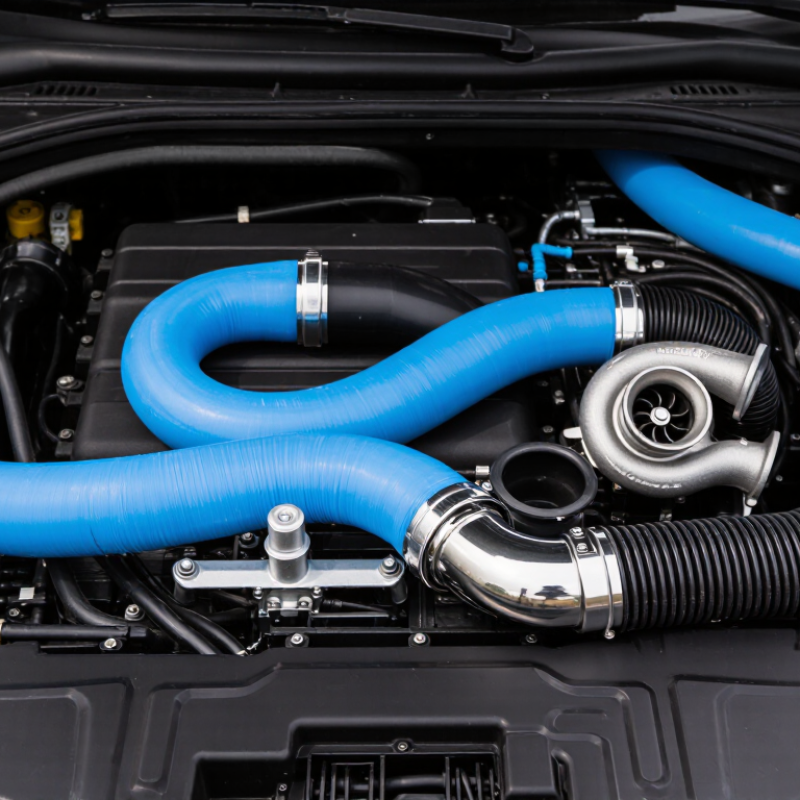
Identify the Hose’s Purpose and Vehicle System
Before choosing a silicone hose, identify what it must do. A coolant hose carries hot fluid between the engine and radiator, while a charge-air hose handles pressurized air from the turbocharger or intercooler. These jobs are not interchangeable. A hose that looks suitable may still lack the pressure rating or construction the system requires.
Check the vehicle’s year, engine, and exact hose location. Then compare the old hose’s inner diameter, length, bends, and connection points. A tight bend can kink under heat, and a slightly wrong diameter may leak or slip off. Measure carefully. The routing matters, too: nearby exhaust parts can expose a hose to radiant heat, even when its fluid rating seems adequate. Leave clearance where possible, and use proper clamps at the joints.
Silicone is commonly used for coolant and charge-air applications, but it is not automatically suitable for fuel or oil. Confirm compatibility with the hose manufacturer’s specifications for the intended fluid, temperature, and pressure. Also inspect adjoining fittings for corrosion, cracks, or sharp edges before installation. A new hose cannot fix a damaged connection. I would still double-check the application chart; catalog descriptions can make similar-looking parts seem more universal than they are.
How to Choose the Right Silicone Automotive Hose? - Identify the Hose’s Purpose and Vehicle System
Start by identifying the system and fluid or air the hose carries. Confirm the vehicle manufacturer’s specifications and the hose’s rated temperature, pressure, dimensions, and fluid compatibility before installation.
| Vehicle System and Purpose | Typical Medium | Selection Considerations | Important Checks |
| Engine cooling — radiator or coolant connection | Coolant in the engine cooling circuit | Choose a coolant-compatible hose with the correct inner diameter, bend shape, and pressure and temperature ratings. Reinforcement helps the hose resist pressure and deformation. | Check the vehicle’s specified hose routing and clamp type. Silicone hose is not automatically compatible with every coolant or application. |
| Cabin heating — heater hose | Hot engine coolant flowing to and from the heater core | Match the original hose diameter and routing, and allow for engine movement and tight bends without kinking. | Verify coolant compatibility and operating ratings. Ensure the hose does not rub against nearby components or contact hot exhaust parts. |
| Forced induction — turbocharger or intercooler charge-air connection | Compressed intake air, which may be hot and pressurized | Use a hose specifically rated for charge-air service, with suitable reinforcement, pressure capability, and temperature limits. | Some charge-air systems contain oil mist. Confirm the hose material is suitable for the exposure and use secure, correctly sized connections. |
| Intake system — air duct or intake connection | Intake air, usually under low pressure or suction | Choose a hose that maintains its shape under the system’s vacuum or pressure conditions and fits the intake routing. | Do not assume a flexible silicone connector can replace a duct that requires specific airflow characteristics or structural support. |
| Vacuum-operated accessories | Vacuum for compatible control or accessory circuits | Use hose designed for the circuit’s vacuum level and temperature; select a size that fits the fittings securely. | For brake-booster or other safety-critical circuits, use the specified hose type. A hose that collapses or leaks can impair system operation. |
| Fuel, engine oil, or transmission-fluid lines | Fuel or petroleum-based lubricants | Do not select ordinary silicone hose for these applications. Use hose specifically rated for the exact fluid, pressure, and service conditions. | Silicone is generally not suitable for direct fuel or oil service unless the hose is specifically engineered and rated for that application. |
Check Operating Temperature, Pressure, and Fluid Compatibility
Choosing a silicone automotive hose starts with the temperatures it will actually face, not just the engine’s normal reading. Check the hose’s continuous temperature rating and any short-term peak rating. Heat can build near a turbocharger or exhaust manifold, while cold starts make some hoses less flexible. Leave room for both extremes.
Pressure matters just as much. Compare the hose’s working-pressure rating with the system’s maximum pressure, including brief spikes. A coolant line may see pressure changes as the engine warms, and a poorly supported hose can rub against a bracket. Small details count. Check whether the stated rating applies at your operating temperature; heat can reduce pressure capacity. Secure the hose without crushing it.
Then verify fluid compatibility. Silicone works well in many coolant and air applications, but it is not automatically suitable for every oil, fuel, or additive. Consult a compatibility chart for the exact fluid and concentration. Inspect a sample after service if the application is unfamiliar. Swelling, soft spots, or a tacky surface can signal trouble. I have seen fit and appearance distract from compatibility checks; that is an easy mistake to repeat. Ensure the hose also matches the fitting diameter and bend radius, so it sits without kinks or tension.
Choose the Correct Diameter, Shape, and Length
How to Choose the Right Silicone Automotive Hose?
Choose the Correct Diameter, Shape, and Length
Start with the fitting, not the old hose’s outside measurement. Match the hose’s inside diameter to the fitting or pipe diameter. A loose fit can leak; an overly tight fit may be difficult to install and can stress the hose. Check the fitting’s bead and clamp position, too. Small differences matter. Measure twice, especially if the old hose is swollen or distorted. Its dimensions may not reflect the original specification.
Tips: Use calipers where possible. Measure the fitting’s outer diameter, and confirm the hose’s stated inner diameter. Avoid stretching a hose to make it fit.
Choose a shape that follows the route without flattening or sharply bending. A molded elbow can help around a tight corner, while a straight hose may work for a gentle run. Check the hose’s minimum bend radius, and leave clearance from hot or moving parts. A neat-looking route is not always a safe one. Recheck it with nearby components in place.
Measure length along the actual path, including the bends and enough slack for engine movement. Too short can pull on connections; too long can sag, rub, or kink. Don’t rely only on a straight-line measurement. A flexible measuring tape or a piece of cord can trace the route. Then compare that result with the installed clearance. It may take a second adjustment.
Compare Silicone Construction and Reinforcement Options
Silicone hose selection depends on both its layers and reinforcement. Technical material tables commonly place silicone elastomers near −50°C to 200°C, but that is not an assembly rating. SAE J20 sets performance requirements for automotive coolant hoses; check the hose’s own pressure and temperature ratings against the vehicle’s service data. A shiny outer layer proves little.
A single-ply wall can suit simpler, lower-pressure routing. Multi-ply construction adds strength, but extra layers can make tight bends harder and increase bulk. Polyester reinforcement is common for coolant service. Aramid can offer greater strength at lower weight, while a wire helix supports suction applications and helps resist collapse. More reinforcement is not always better.
ASTM D573 evaluates rubber heat aging under controlled conditions, but it cannot predict every under-hood hot spot or fitting failure. Inspect the actual route: a hose pressed against a sharp bracket needs different protection from one with open airflow. Check bend radius, clamp fit, and nearby heat sources. I still treat catalog temperature figures cautiously. A small routing error can matter more than one extra reinforcement ply.
Confirm Vehicle Fitment and Installation Requirements
Before ordering a silicone automotive hose, match it to the vehicle’s year, model, engine, and cooling-system layout. Two engines in the same model range may use different hose shapes or connection sizes. Check the service manual or a reliable parts diagram, then compare the hose ends, bends, and overall length with the part being replaced. Small differences matter. Measure the inner diameter at each connection; do not rely on a flattened old hose.
Look closely at the route through the engine bay. Note nearby belts, fans, brackets, and hot surfaces, then check that the replacement will not rub or kink when installed. Measurements can be awkward in a cramped bay, and my first estimate may not be good enough. Recheck it. Also confirm the hose’s stated temperature and pressure ratings suit the vehicle’s system. Silicone is not automatically suitable for every fluid; verify material compatibility before use.
Installation requirements count, too. Confirm whether the hose needs specific clamps, adapters, or formed bends, and make sure there is enough room to fit and tighten them. Work only when the engine is cool. After installation, refill and bleed the cooling system according to the vehicle’s procedure, then inspect for leaks as it warms up. A neat fit is reassuring, but it is not proof of correct fitment.


