

China’s electric two- and three-wheeler market is expanding, but covered adult tricycles remain a specialized category. The International Energy Agency’s Global EV Outlook 2024 reports roughly 10 million electric two- and three-wheeler sales worldwide in 2023, with China representing the largest share. This figure describes the wider vehicle segment, not sales of covered adult tricycles alone. That distinction matters when assessing supplier claims.
An Adult Electric Tricycle With Cover can serve practical needs: carrying groceries, commuting short distances, or staying sheltered during light rain. Yet a canopy is only one part of the decision. Buyers should also examine rated payload, battery capacity, braking performance, frame construction, spare-parts access, and warranty terms. Ask suppliers for specification sheets and clear photographs of the chassis, wiring, and canopy fasteners. Small details count. A loose canopy joint or an unclear battery warranty can become a real inconvenience.
This guide introduces ten China-based suppliers for comparison, rather than presenting a guaranteed ranking. Supplier capabilities and product availability can change, and published specifications may not show how a tricycle handles uneven roads or daily loading. A test ride is better. Where that is not possible, request a video demonstration and confirm the exact configuration in writing. The comparison focuses on verifiable product information and practical questions buyers can raise. It is not exhaustive—and supplier descriptions still deserve careful checking.
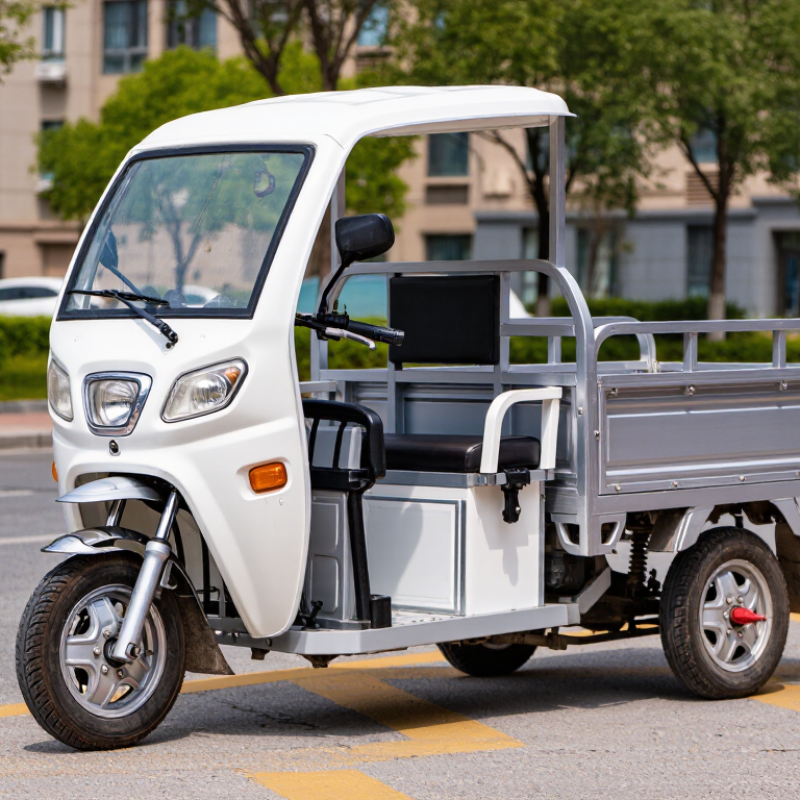
An adult electric tricycle with a cover combines three-wheel support with shelter from sun, light rain, and wind. The cover may be a simple canopy or a more enclosed cabin, so check what it actually protects. A canopy keeps the ride open and airy. An enclosed design offers more shelter but can feel warm or restrict airflow. Small details matter.
The added cover can affect visibility, handling, and ease of getting on and off. Look for clear sightlines, secure fasteners, and doors or openings that are easy to use. Check the tricycle’s stated load capacity, braking system, tire condition, and battery range under realistic conditions. Hills, rider weight, cargo, and cold weather can reduce range. I would not assume a covered model is automatically safer or more comfortable; fit and build quality matter, too. Sometimes the details disappoint.
Tips: Sit on the tricycle before buying, if possible. Test the brakes and steering at low speed. Ask how the cover attaches and whether replacement panels are available. After wet rides, dry the cover and inspect its seams.

Supplier evaluation should begin with evidence, not catalogue claims. For a covered adult electric tricycle, request a loaded road-test record, braking results, and inspection photos of welds and roof joints. Ask how the vehicle behaves on a slope, over uneven paving, and after rain. Small details matter. A leaking canopy seam or loose fastener can quickly become a daily problem.
Battery sourcing deserves separate scrutiny. The International Energy Agency’s 2022 report, Global Supply Chains of EV Batteries, estimated that China held about 75% of global battery-cell manufacturing capacity, alongside roughly 70% of cathode production and 85% of anode production. This concentration makes traceability and quality control especially important. Buyers should ask suppliers to identify cell specifications, batch records, warranty terms, and the process for handling failed packs. A large manufacturing base is not proof that every component is consistent.
Factory audits should also examine spare-parts availability, assembly records, and how complaints are resolved. Ask for a sample unit, then inspect it with the intended rider and cargo load. Check whether the cover blocks visibility or catches wind during a turn. I would not judge a supplier by one polished sample alone; repeated inspections take time, and some details are easy to miss. That is worth admitting.
The table below presents ten practical evaluation dimensions for adult electric tricycles with covers. The suggested weights are an example scoring framework, not verified supplier scores or a ranking of individual suppliers.
| Evaluation Dimension | Suggested Weight | What to Assess | Evidence to Request or Check |
|---|---|---|---|
| 1. Vehicle configuration and intended use | 12% | Whether the seating, cargo layout, dimensions, and controls suit the intended passenger or utility use. | Dimensioned drawings, configuration sheet, and a sample-unit inspection. |
| 2. Canopy design and weather protection | 10% | Cover material, frame attachment, visibility, ventilation, drainage, and ease of entry and exit. | Material specifications, canopy installation details, and documented water-spray or rain testing. Avoid treating a cover as proof that the vehicle is waterproof. |
| 3. Motor, battery, and electrical system | 13% | Compatibility of motor, controller, battery, charger, and wiring with the proposed vehicle configuration and market. | Component specifications, battery and charger documentation, wiring diagrams, and applicable test or conformity documents for the destination market. |
| 4. Braking and vehicle stability | 13% | Brake type and performance, steering response, frame integrity, and stability under the stated loading conditions. | Brake and load-test records, inspection results, and a supervised test ride where appropriate. |
| 5. Payload and seating capacity | 10% | Whether the declared passenger capacity and payload are clearly defined and consistent with the vehicle design. | Rated-load documentation, seating layout, and verification that stated limits are not confused with cargo-only capacity. |
| 6. Range and operating performance | 10% | Whether claimed range and speed are supported by a stated test method and realistic operating conditions. | Test conditions covering load, terrain, speed, temperature, and battery state. Compare like-for-like results rather than headline claims alone. |
| 7. Manufacturing quality and traceability | 12% | Consistency of assembly, incoming-part checks, final inspection, and handling of defects or rework. | Quality-control procedures, inspection checklists, production records, and a factory or third-party inspection when feasible. |
| 8. Customization and change control | 8% | Ability to specify options such as canopy configuration, seating, color, or electrical components while controlling design changes. | Written configuration records, approved samples or drawings, and confirmation of which changes affect price, lead time, or compliance. |
| 9. Export documentation and destination-market fit | 6% | Readiness to provide accurate product, shipping, and conformity documentation relevant to the buyer's destination. | Sample commercial and technical documents; confirm applicable vehicle classification and local requirements independently. |
| 10. Spare parts, warranty, and after-sales support | 6% | Clarity of warranty coverage, parts availability, troubleshooting support, and procedures for handling claims. | Written warranty terms, spare-parts list, support contact process, and defined response and claim procedures. |
| Total Suggested Weight | 100% | Use the same evidence requirements and scoring method when comparing suppliers; verify claims against the specific model and destination market. | |
Note: This is a general evaluation template. It does not identify, endorse, or rank any specific supplier, and the suggested weights should be adjusted to the buyer's use case and local requirements.
Profiles of China’s ten adult electric tricycle suppliers should compare more than catalogue prices. Check whether each supplier designs frames in-house, builds weather covers, and tests finished vehicles. Ask for production capacity, component specifications, export experience, and after-sales arrangements. A factory visit helps. So does a sample inspection. Some suppliers may be trading intermediaries, and their technical support can be harder to verify.
Industry data gives useful context, not a purchasing guarantee. The International Energy Agency’s Global EV Outlook 2024 reported that electric-vehicle battery demand reached about 750 GWh in 2023, roughly 40% above 2022. BloombergNEF’s 2024 Battery Price Survey put the average lithium-ion pack price at $115 per kWh. These are broad market benchmarks, not tricycle battery quotations. Ask suppliers to specify battery chemistry, rated capacity, charger, and the conditions used for any range claim.
For covered models, inspect door clearance, roof joints, window seals, wipers, brake response, and turning radius. Small details matter on narrow streets. Request payload and hill-climb test records, plus a written spare-parts schedule. A polished catalogue proves little. I would treat unusually long range claims cautiously; load, temperature, road surface, and driving speed can change real-world performance.
Comparing adult electric tricycle suppliers means looking beyond paint, canopy shape, and advertised range. Check payload ratings, frame material, brake type, battery capacity, and whether the cover blocks rain without restricting visibility. Ask for measured range under load; a short test ride with an empty basket proves little. Small details matter.
BloombergNEF’s 2024 Battery Price Survey reported an average lithium-ion pack price of US$115 per kilowatt-hour, 20% below 2023. This industry benchmark helps explain changing battery costs, but it does not prove a supplier uses quality cells or offers a durable pack. A useful signal. Request battery specifications, traceability documents, and records of charge, vibration, and temperature testing. Then compare warranty terms and replacement-part lead times.
Manufacturing capability shows up in repeatability. Ask suppliers for frame-weld inspection records, water-ingress test results, and production-capacity details. Confirm whether the same brakes, motor, and battery are used across quoted batches. A sample unit can look excellent. Batch consistency may be less certain. I would also compare canopy attachment points, seat comfort, turning clearance, and access to routine service parts. These checks make the ten-supplier comparison more practical than a feature list alone.
When comparing China’s adult electric tricycle with cover suppliers, look beyond product photos. Ask for a current specification sheet showing payload, motor output, battery chemistry and capacity, braking system, wheelbase, and overall dimensions. The cover deserves equal attention: request fabric details, frame material, drainage design, and clear photos of seams and attachment points. Small details matter. A loose canopy can flap during a short test ride.
Verify claims with dated documents and a live video walkthrough of the production floor. Ask the supplier to demonstrate starting, turning, braking, reversing, and climbing a modest ramp with a stated load. Request inspection records, sample test results, warranty terms, spare-parts lead times, and recent export references you can contact. Check that the company name on quotations and certificates matches; ask for written clarification if it does not. If possible, inspect a pre-shipment unit or hire an independent inspector. Compare the sample with the final order, not just the catalog. This takes time. Ask what changed between the tested sample and current production; answers may be incomplete, so record open questions and confirm them in writing.
A practical supplier-verification checklist. Bar values show the number of suggested evidence checks in each category—not supplier ratings or market statistics.
Verify legal identity, product specifications, battery documentation, quality procedures, after-sales support, and shipping terms before placing an order. Ask for current, relevant records and confirm them with the issuing organizations where possible.