

Who Are the Top Gas Brick Oven Suppliers in China?

Choosing a reliable Gas Brick Oven supplier in China takes more than comparing catalog prices. Buyers should examine oven construction, burner performance, temperature control, and service support. These details affect daily operation, fuel use, and baking consistency. Heat matters. So does the way it moves through the chamber.

A useful supplier comparison looks at verifiable specifications, factory capabilities, product testing, and customer references. Ask what refractory materials line the oven, how quickly it reaches working temperature, and whether replacement parts are available. Request clear installation guidance and practical warranty terms. Photos can help, but they cannot confirm build quality on their own. A video call or factory visit may provide better evidence, though not every buyer can arrange one.

The top supplier will depend on the intended use. A restaurant serving pizzas all day may need different capacity and controls than a bakery or hotel kitchen. Check dimensions, output claims, customization options, and export packaging against your actual requirements. Then compare responses for clarity, not just speed. A confident sales answer is not the same as proven performance.

No supplier is perfect. Even strong products may require careful installation, staff training, or adjustments to suit local workflows. This guide introduces leading Chinese suppliers and the practical questions that help buyers assess them. The aim is not to promise a universal winner, but to support a better-informed decision.
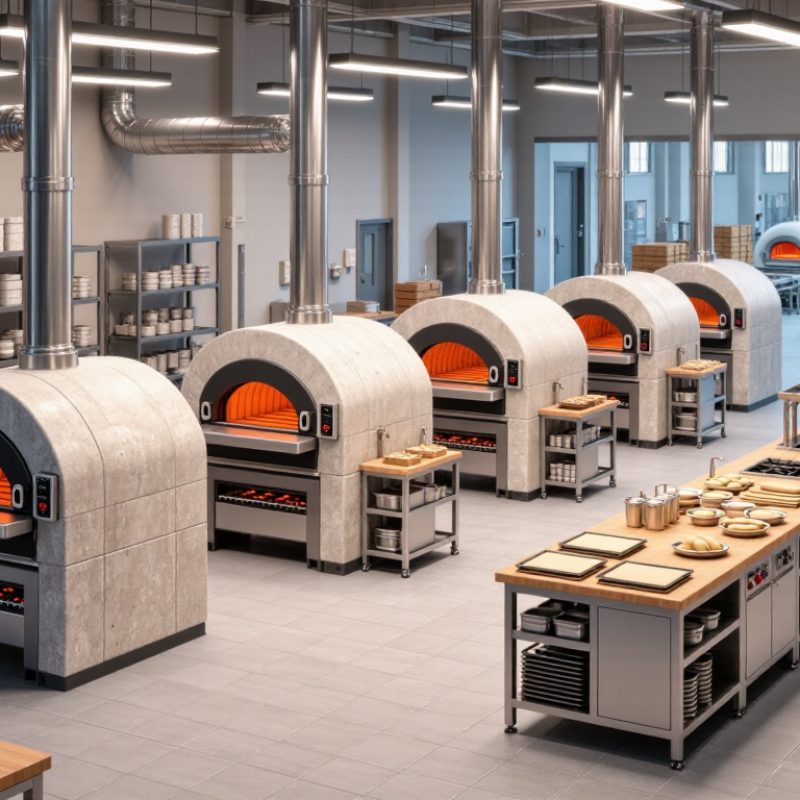
Who Are the Top Gas Brick Oven Suppliers in China?

How Gas Brick Ovens Work and Where They Are Used

A gas brick oven combines a controlled burner with a heat-retaining masonry chamber. The burner warms the oven floor and dome, while hot air circulates around the food. Once the bricks absorb heat, they release it steadily, helping cook pizza bases, flatbreads, and roasted dishes. Heat matters. Operators usually preheat the oven and check the floor temperature before loading food. A small flame adjustment can change browning, but it cannot quickly correct unevenly heated bricks.

These ovens are used in restaurants, bakeries, catering kitchens, and some outdoor cooking areas. A busy pizzeria may value quick temperature recovery between batches, while a bakery may prefer the stable heat for bread. The results depend on oven design, fuel supply, insulation, and the operator’s routine. Watch the flame. Poor airflow or rushed preheating can leave one side pale and another overdone; even experienced cooks need to rotate food and monitor it. For reliable operation, installation should include suitable ventilation and be handled by a qualified professional. Gas firing is convenient, though it does not remove the need for cleaning, temperature checks, or careful training.

Criteria for Evaluating Gas Brick Oven Suppliers

Choosing a gas brick oven supplier in China takes more than comparing prices. Ask how long the team has built commercial ovens and which projects resemble yours. Real experience should show in practical details: burner placement, door sealing, and performance across repeated heating cycles. Request installation photos or a production walkthrough, not just polished catalog images.

Inspect the brick and insulation specifications. Suppliers should identify the firebrick grade, insulation layers, and outer-shell materials in writing. Request temperature-uniformity results and a clear explanation of the test method. A hot spot near the back can scorch flatbread while the front remains pale. Ask how the design addresses this. Check gas-input range, controls, and shutoff features against your site requirements. Have a qualified local technician review the configuration.

Reliable suppliers provide drawings, packing details, spare-part lists, and realistic service response times. Confirm warranty coverage and who handles replacement parts or remote troubleshooting. Small details matter. Compare references from operators with similar menus and daily output. Still, paperwork cannot prove every claim. Verify a key performance figure independently, even if it slows the purchase. No checklist is perfect; communication after a difficult question can reveal as much as a sales presentation.

Who Are the Top Gas Brick Oven Suppliers in China? - Criteria for Evaluating Gas Brick Oven Suppliers

Use this supplier-neutral scorecard to compare quotations and supporting evidence. The weights are suggested evaluation priorities, not verified rankings or claims about individual suppliers.

Evaluation criterion Suggested weight What to compare Evidence to request Practical evaluation check
Product fit and oven capacity 15% Internal cooking area, chamber shape, opening dimensions, intended food type, and stated production capacity. Dimensioned drawings, model specification sheet, and a written definition of any stated capacity. Check usable chamber dimensions against the size and quantity of food you expect to cook; clarify whether capacity is theoretical or tested.
Heating performance and fuel use 15% Specified operating-temperature range, heat-up time, temperature recovery, and gas consumption under stated test conditions. Test records showing ambient conditions, fuel type and pressure, measurement locations, warm-up procedure, and consumption units. Compare performance only when test conditions are alike. Treat unqualified temperature or fuel-saving claims as unverified.
Burner and gas-system safety 15% Burner configuration, ignition and flame-failure safeguards, gas type, rated input, and compatibility with local supply conditions. Gas-system diagram, component specifications, installation instructions, and test or conformity documents applicable to the destination market. Confirm fuel type and pressure before ordering. Have installation and commissioning checked by a qualified local gas professional.
Construction and thermal materials 10% Refractory chamber materials, insulation design, exterior finish, structural support, and access to replaceable parts. Bill of materials, material data sheets where available, construction drawings, and maintenance instructions. Check that quoted materials and thicknesses are stated clearly and match the production unit and approved drawings.
Applicable compliance documentation 15% Whether the exact oven configuration meets requirements for the intended country and commercial or residential use. Certificates, declarations, test reports, and model references that match the quoted product and destination market. Requirements vary by market. For covered gas appliances sold in the EU, check applicable obligations under Regulation (EU) 2016/426. ISO 9001 concerns quality-management systems; it is not product certification.
Quality control and production consistency 10% Incoming-material checks, assembly controls, leak testing, final inspection, and traceability of the finished unit. Quality-control checklist, sample inspection report, test procedure, and production photos or video for the ordered configuration. Agree on inspection criteria and acceptance steps before production; consider a pre-shipment inspection for higher-value orders.
Customization and documentation 5% Available sizes, finish options, control configuration, electrical requirements where relevant, and language options for manuals and labels. Approved drawings, final bill of materials, installation manual, operating instructions, and spare-parts list. Document all changes in the final order specification; confirm that manuals and labels match the delivered model.
Warranty and after-sales support 10% Warranty duration and exclusions, response process, technical support, replacement-part availability, and service responsibilities. Written warranty terms, support contact process, recommended spare-parts list, and parts quotation with lead times. Check who pays freight and labor for warranty claims, and whether wear parts and installation issues are excluded.
Commercial terms and delivery reliability 5% Quotation clarity, order quantity, production lead time, packing method, shipping terms, and payment milestones. Itemized quotation, production schedule, packing details, and written shipping and payment terms. Compare total landed cost, not just unit price; clarify responsibility for customs clearance, duties, and destination delivery.
Total suggested weight 100% Score each criterion consistently, using documented evidence rather than marketing claims alone.

Note: Regulatory obligations depend on the oven type, intended use, and destination market. Confirm requirements with the relevant authority or a qualified conformity-assessment professional before purchase or import.

Leading Gas Brick Oven Suppliers in China

Leading Gas Brick Oven Suppliers in China

China’s gas brick oven suppliers vary in how much they manufacture in-house. Some produce oven chambers and steel housings, while others assemble components from specialist workshops. Ask what is made on site. A clear answer helps you judge quality control.

A capable supplier should explain how the burner heats the cooking chamber and how insulation limits heat loss. Request drawings, material specifications, and records from temperature tests. Details matter. Check whether the floor heats evenly, since a hot spot can scorch one side of a pizza. Ask about custom dimensions, gas connection requirements, and replacement parts before discussing price. Not enough.

Export preparation also deserves attention. Brick and refractory parts need firm support inside the crate, not just loose padding. Ask for photos of completed packing and confirm which documents come with the shipment. Samples or a live factory video call can clarify workmanship, but neither replaces a careful written specification. A polished catalogue is not proof of consistent production. Smaller suppliers may offer more flexibility, yet their delivery planning can be less predictable. That trade-off is worth examining.

Products, Manufacturing Capabilities, and Certifications

A capable gas brick oven supplier should offer more than a stone dome and burner. Compare cooking-floor dimensions, rated heat output, insulation thickness, burner controls, and the availability of replacement parts. Ask for drawings and test records for the exact model. Product photos alone cannot show how evenly heat reaches the back of the chamber.

Manufacturing capability shows up in details: consistent refractory joints, clean welds, secure gas connections, and repeatable assembly checks. Ask how suppliers inspect burner performance and verify temperature stability before shipment. Certifications need careful reading. The ISO Survey of Management System Standard Certifications 2022 recorded 426,716 ISO 9001 certificates in China, but this broad figure is not oven-specific. Treat a supplier’s quality certificate as evidence of its management system, not proof that every oven model meets your destination-market requirements. Request certificates and test reports matching the model and intended market.

Tips: Check certificate numbers with the issuing body. Confirm fuel type, operating pressure, and installation requirements in writing. A polished sample may not represent every production run; that uncertainty deserves a question, not an assumption.

How to Compare Supplier Pricing and After-Sales Support

When comparing gas brick oven suppliers in China, request an itemized quote with matching specifications. Compare oven dimensions, cooking-floor material, burner output, insulation, controls, packing, freight, and commissioning costs. Match the details before comparing totals. A low price may exclude installation or spare parts. Ask what the price covers, and whether duties or delivery to your site are included. For example, a quote for a larger oven is not directly comparable if its burner capacity or insulation differs. Small details matter.

After-sales support deserves the same scrutiny as the purchase price. Request written warranty terms, including coverage for burners, controls, and refractory components. Confirm typical response times, available spare parts, and who pays shipping for replacements. Ask whether remote troubleshooting or technician visits are available, and what those services cost. A sample parts list can reveal how practical future repairs may be. Keep the answers in writing. A polished quotation is reassuring, but it does not prove that support will be quick. I would still check references from buyers with similar ovens; that step takes effort, and it may not give a complete picture.

Article Source: