Choosing the right Mixing Pump is rarely a simple catalogue decision. Global buyers must match pump design with viscosity, flow rate, temperature, solids content, and required shear. A thin cleaning solution behaves differently from a heavy coating, food paste, or mineral suspension. The wrong impeller can create poor circulation, excessive heat, or premature seal wear.
This guide examines ten common mixing pump types used across chemical processing, food production, wastewater treatment, paints, and industrial manufacturing. Each type offers practical strengths and limitations. Centrifugal mixing pumps may provide efficient circulation for low-viscosity liquids. Positive displacement designs can handle thicker materials with controlled flow. Air-operated, magnetic-drive, inline, and submersible options may solve different installation challenges.
Look closely at the details.
Experienced engineers also inspect tank geometry, pipe length, suction conditions, cleaning routines, and maintenance access. A pump that performs well in a laboratory may struggle beside a large storage vessel. Datasheets help, but they do not tell the whole story. Field testing, verified performance curves, and supplier documentation remain important. Buyers should also confirm material compatibility, energy requirements, safety features, and applicable regional certifications before ordering.
There is no universal winner. That matters.
Some recommendations in this overview may require adjustment after a site survey or pilot test. Even experienced buyers can underestimate changing viscosity or unexpected solids. Reliable suppliers should explain these risks clearly, provide operating limits, and support commissioning. With careful comparison, this guide can help international purchasers shortlist a suitable Mixing Pump with greater confidence and fewer costly surprises.
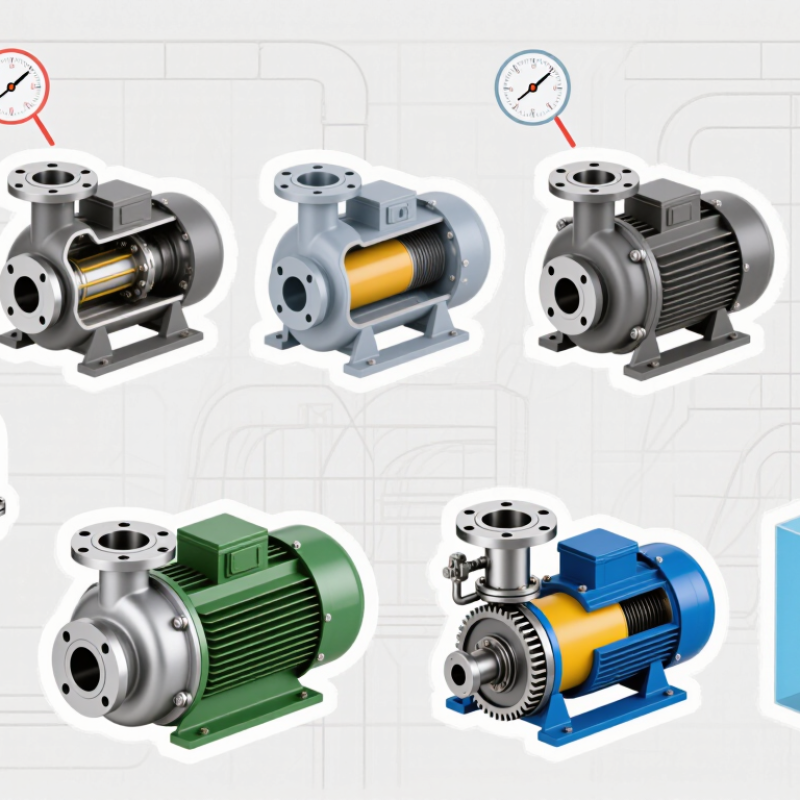
Mixing pumps combine fluid transfer and blending in one controlled loop. A centrifugal mixing pump draws liquid through an inlet, accelerates it with an impeller, and returns it through a discharge nozzle. This circulation creates turbulence, dispersing heat, solids, or additives. Inline, self-priming, submersible, diaphragm, progressive cavity, and eductor pumps suit different viscosities and solids levels. The best choice depends on shear sensitivity, tank geometry, temperature, and required turnover rate.
The U.S. Department of Energy’s Pumping System Assessment Tool guidance reports that pumping systems can account for about 25% of industrial electricity use. That figure makes hydraulic efficiency important, but efficiency alone can mislead. A low-power pump may mix poorly and require longer operating hours. In commissioning work, operators should measure flow, pressure, motor load, and blend time together. A visible vortex is not proof of uniform mixing. Sometimes it only signals wasted energy.
Tips: Start with the fluid, not the pump catalog. Record viscosity at operating temperature. Check whether solids settle during shutdown. Use a variable-speed drive when process conditions change. Keep suction piping short and properly sized. The Hydraulic Institute recommends evaluating the complete pumping system, including controls and piping, rather than judging the pump alone. Test samples from several tank locations. One sample can hide a weak mixing zone. As a practical caution, published performance curves may not match real fluids perfectly, so pilot testing remains valuable.
Mixing pumps are not classified by appearance alone. Buyers usually examine impeller design, installation position, flow pattern, and process duty. Axial-flow pumps move liquid vertically and suit large tanks with low-viscosity fluids. Radial-flow pumps create stronger shear for blending chemicals or dispersing powders. Propeller pumps deliver high circulation with modest energy use. Turbine pumps provide controlled turbulence in medium-sized vessels.
Paddle, anchor, and helical-ribbon pumps work better with thicker materials. Paddle designs handle gentle blending, while anchor pumps scrape material from tank walls. Helical-ribbon pumps can move pastes, creams, and other viscous products. In-line mixing pumps combine pumping and blending inside a pipe. They save floor space, but pressure loss must be checked carefully.
Small detail. It matters.
Installation also changes the classification. Top-entry pumps are flexible for process tanks and easy to inspect. Side-entry pumps support large storage tanks with limited roof access. Bottom-entry pumps improve circulation near the vessel floor, although seal reliability deserves attention. Submersible mixing pumps suit wastewater basins and sediment control. Eductor-based systems use liquid pressure to create circulation without a rotating shaft. During selection, I would verify viscosity at operating temperature, solids content, tank geometry, and required turnover time. A catalog flow rate may not match real performance.
That assumption needs testing.
Top 10 Types of Mixing Pumps for Global Buyers
Selecting mixing pumps requires more than comparing flow rates. Viscosity, solids content, temperature, tank geometry, and cleaning procedures all affect performance. In field applications, a pump that works well with water may struggle with thick slurry.
The ten common types include centrifugal mixing pumps, positive displacement pumps, rotary lobe pumps, screw pumps, diaphragm pumps, jet mixing pumps, inline rotor-stator pumps, submersible mixers, high-shear pumps, and air-operated mixing pumps. Centrifugal models suit low-viscosity liquids and continuous circulation. Positive displacement designs handle thicker fluids with controlled flow. Rotary lobe and screw pumps reduce damage to sensitive materials. Diaphragm pumps tolerate difficult fluids and intermittent duties. Jet systems mix large tanks without moving parts inside the vessel. Inline rotor-stator units create intense shear for emulsions and dispersions. Submersible mixers work directly in wastewater basins and storage tanks.
Check the details.
A buyer should verify seal materials, motor voltage, wetted metals, and available spare parts. Food, chemical, water, and mineral applications often require different construction standards. High-shear pumps can heat products or damage fragile particles when operated too aggressively. Oversizing is another common mistake; excessive speed may increase energy use without improving uniformity. I have found that installation depth and suction piping are sometimes overlooked, although they strongly influence stability. Testing with the actual liquid remains the most reliable step, especially when viscosity changes during processing. While catalogs provide useful guidance, operating conditions can expose assumptions that looked reasonable on paper.
| No. | Mixing Pump Type | Operating Principle | Typical Flow Range | Typical Viscosity | Solids Handling | Best-Fit Applications | Primary Advantages |
|---|---|---|---|---|---|---|---|
| 1 | Centrifugal Mixing Pump | Uses a rotating impeller to create fluid circulation, pumping, and moderate in-tank blending. | 5–5,000 m³/h | Up to approximately 2,000 cP | Low to moderate suspended solids, depending on impeller design | Water treatment, chemical transfer, cooling liquids, and low-viscosity process fluids | High flow capacity, compact construction, and widely available configurations |
| 2 | Axial-Flow Mixing Pump | Moves a large volume of liquid parallel to the shaft, producing strong circulation at relatively low pressure. | 20–10,000 m³/h | Usually below 5,000 cP | Low to moderate solids | Large storage tanks, wastewater basins, cooling ponds, and low-head circulation systems | Excellent bulk circulation and low energy consumption per unit of flow |
| 3 | Propeller Mixing Pump | A propeller generates high-volume, low-head flow to keep liquids moving and improve tank uniformity. | 20–20,000 m³/h | Typically below 3,000 cP | Low to moderate solids | Equalization tanks, aquaculture, municipal treatment, and large-volume liquid blending | Very high circulation rates with relatively low power requirements |
| 4 | Side-Entry Mixing Pump | Installed through the tank wall; the rotating shaft and impeller circulate the contents horizontally or diagonally. | 10–5,000 m³/h | Up to approximately 10,000 cP | Moderate solids, subject to impeller clearance | Large tanks, petroleum storage, wastewater, chemical storage, and continuous blending | Accessible maintenance and effective circulation in large-diameter tanks |
| 5 | Top-Entry Mixing Pump | Mounted on the tank roof or cover, it uses a vertical shaft and impeller to blend from the top downward. | 1–3,000 m³/h | Up to approximately 50,000 cP with suitable impellers | Low to high solids, depending on equipment design | Food processing, pharmaceuticals, chemicals, paints, coatings, and general batch mixing | Flexible impeller selection and strong control over mixing intensity |
| 6 | Bottom-Entry Mixing Pump | Installed at the bottom of the vessel to create upward circulation and reduce dead zones near the tank floor. | 1–2,000 m³/h | Up to approximately 20,000 cP | Low to moderate solids | Hygienic processing, emulsions, crystallization control, and tanks with limited top access | Efficient bottom-to-top circulation and a clean, unobstructed tank top |
| 7 | Inline High-Shear Mixing Pump | Forces liquid through a narrow rotor-stator or high-velocity mixing zone to disperse, emulsify, or homogenize materials. | 0.5–500 m³/h | Approximately 1–10,000 cP | Usually low solids; abrasive particles may require special materials | Emulsions, suspensions, cosmetics, coatings, adhesives, and fine chemical processing | Rapid dispersion, consistent product quality, and continuous operation |
| 8 | Jet or Eductor Mixing Pump | Uses a high-velocity motive stream to entrain and circulate surrounding tank liquid through jet nozzles. | 5–2,000 m³/h | Typically below 5,000 cP | Low to moderate solids, depending on nozzle design | Large tanks, wastewater aeration, chemical blending, and applications requiring no internal moving parts | Minimal mechanical components inside the tank and low maintenance requirements |
| 9 | Twin-Screw Mixing Pump | Two intermeshing screws convey and gently mix liquid while maintaining positive displacement flow. | 0.1–300 m³/h | Approximately 1–100,000 cP | Can handle soft or suspended solids with suitable screw geometry | Food, dairy, personal care, pharmaceutical, and viscous chemical products | Handles high viscosity, provides accurate flow, and can often support product transfer and cleaning cycles |
| 10 | Progressive Cavity Mixing Pump | A helical rotor moves liquid through sealed cavities, producing smooth positive displacement and gentle mixing. | 0.1–500 m³/h | Approximately 1–100,000 cP | Good capability for slurries and suspended solids; abrasive service requires wear-resistant materials | Sludge, polymers, wastewater, mineral slurries, adhesives, and shear-sensitive fluids | Low-pulsation flow, strong suction capability, and effective handling of thick or solids-laden fluids |
| Note: Flow and viscosity figures are typical selection ranges rather than guaranteed limits. Actual performance depends on fluid density, temperature, solids concentration, tank geometry, impeller design, pressure, and required mixing intensity. | |||||||
Choosing among centrifugal, diaphragm, gear, screw, lobe, peristaltic, drum, submersible, inline, and high-shear pumps requires more than checking flow rate. Start with the fluid. Record viscosity, density, solids content, temperature, and corrosiveness. Then compare rated flow against actual head pressure. A pump delivering 100 m³/h at zero head may perform very differently inside a full vessel.
Motor power can mislead. Examine hydraulic efficiency, shaft speed, shear level, mixing uniformity, and energy use per batch. For abrasive fluids, inspect impeller clearance and wear resistance. For hygienic processing, review surface finish, drainability, seal design, and clean-in-place requirements. NPSH margin matters too, especially with hot or volatile liquids. Request performance curves based on your real fluid, not only water. Field testing often reveals gaps between laboratory claims and factory-floor behavior.
Tips: Ask for test data, material certificates, seal details, and maintenance intervals. Compare noise, vibration, spare-part access, and control compatibility. A perfect comparison is rarely possible. Allow room for uncertainty. If solids settle during shutdown, evaluate restart torque and reverse-flow protection before approving the pump. One overlooked detail can become a costly daily problem.
For global buyers, selecting a mixing pump should begin with the process, not the catalog. Start with the process, not the catalog. Record liquid viscosity at operating temperature, solids concentration, particle size, batch volume, and required turnover time. A low-viscosity water stream may suit an axial-flow pump, while sludge often needs a progressive-cavity or vortex design. High shear can disperse powders, but it may damage flocs or heat-sensitive liquids. I have seen projects specify flow alone, then struggle with settling near tank corners. Tank diameter, liquid depth, baffle layout, and suction position matter as much as rated capacity.
Energy deserves equal attention. The U.S. Department of Energy’s Improving Pumping System Performance sourcebook reports that pumping systems can consume 25–50% of industrial electricity in some facilities. That range makes efficiency more than a procurement checkbox. Compare duty-point efficiency, variable-speed control, motor loading, and cleanability. The UN World Water Development Report 2024 states that agriculture represents about 70% of global freshwater withdrawals. For water-intensive projects, efficient mixing can reduce recirculation demand. Published efficiency numbers can still mislead. They may reflect clean water, not abrasive slurry.
For international projects, confirm voltage, frequency, enclosure rating, materials, seals, spare-part access, and local conformity requirements. 316L stainless steel may resist one chemical but fail in another. Ask for compatibility data at actual concentration and temperature. Do not accept “universal” claims. Pilot testing helps when viscosity changes during reaction or solids settle quickly. Measure torque, current, temperature, and mixing time. Leave operating margin, but avoid oversized pumps; throttling wastes energy. A neat spreadsheet still misses maintenance skills, transport delays, and seasonal water changes. Use traceable test data and documented assumptions before purchase.
Typical representative flow capacity by pump type. Actual performance depends on viscosity, solids content, pressure, temperature, materials, and system design.
How to select: Choose centrifugal and axial-flow designs for high-volume, low-viscosity liquids; screw, lobe, gear, and progressive-cavity pumps for viscous fluids; and diaphragm, piston, or peristaltic pumps where metering, solids handling, or chemical compatibility is critical.