Top 10 Types of Vacuum Pumps and Their Uses
A Vacuum Pump removes gas from a sealed space to create and maintain reduced pressure. The result is lower pressure, not a perfect void. That distinction matters. A pump suited to a small laboratory chamber may struggle with a large, leaky process line. Moisture, dust, and corrosive vapors can also affect performance. Small details matter. Oil condition, seal quality, inlet size, and exhaust routing can change how a system operates. So can the required pressure and the amount of gas entering the pump.
This guide introduces ten common pump types and the jobs they often perform. It covers rotary vane, diaphragm, liquid ring, scroll, screw, claw, piston, Roots booster, diffusion, and turbomolecular designs. Their uses range from packaging and refrigeration service to chemical processing, research, and semiconductor manufacturing. No single design fits every task. Some pumps tolerate wet gases well; others can reach very low pressures but need careful system design. Rankings also vary by industry and operating conditions. That is worth keeping in mind. Before choosing equipment, compare pressure requirements, gas compatibility, flow rate, maintenance needs, and the manufacturer’s specifications. A quick look at the pump name alone rarely tells the whole story.
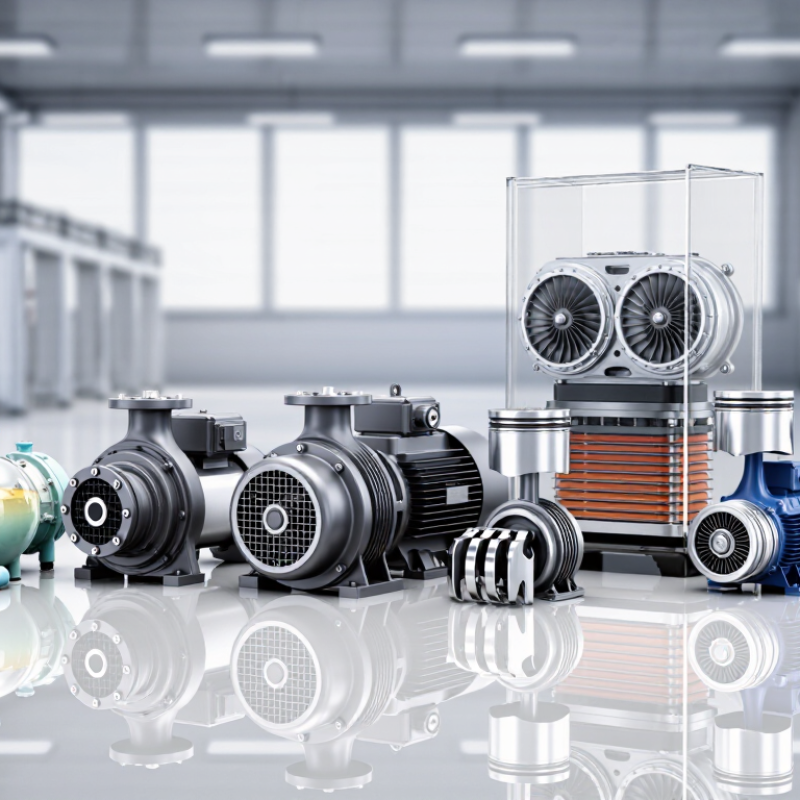
How Vacuum Pumps Create and Maintain a Vacuum
A vacuum pump creates a vacuum by removing gas molecules from a sealed chamber. It does not create empty space. Instead, it lowers the pressure until fewer molecules remain to collide with surfaces or interfere with a process. A rotary-vane pump moves gas through a changing chamber volume, then pushes it toward the exhaust. A diaphragm pump uses a flexible membrane, keeping pumped gas apart from lubricated moving parts. Simple in principle. Less simple in practice.
As pressure drops, gas molecules travel farther between collisions, so pumping can become slower. A single pump may not work efficiently across the full pressure range. Systems may pair a mechanical pump with a turbomolecular pump, which transfers momentum to gas molecules using fast-spinning blades. The right arrangement depends on the required pressure, gas type, and tolerance for contamination. A leak as small as a loose fitting can undo hours of pumping. So can moisture or gas released from chamber walls. Gauges help track pressure, while seals, valves, and clean surfaces help maintain it. Even a stable reading deserves a second look. A gauge shows pressure at its sensor, not necessarily every point in the chamber.
Top 10 Types of Vacuum Pumps and Their Uses
Typical pressure ranges illustrate how different pumps create and maintain a vacuum. Lower pressure means a deeper vacuum.
How vacuum is maintained: Pumps remove gas molecules from a sealed space; continued pumping, tight seals, and control of gas entering the system help sustain the pressure. Diaphragm, liquid-ring, rotary-vane, scroll, and dry-screw pumps are commonly used for rough or backing vacuum. Roots pumps boost a backing pump, while diffusion, turbomolecular, cryogenic, and ion pumps serve high- or ultra-high-vacuum systems. High-vacuum pumps generally need a backing pump to start. Ranges are indicative: actual performance depends on pump design, gas load, temperature, and system setup. The Roots range shown is a typical operating range when paired with a backing pump, not an ultimate pressure.
The Ten Main Types of Vacuum Pumps
The ten main types of vacuum pumps differ in how they move gas and tolerate contamination. Rotary-vane pumps suit general laboratory work and sealed systems. Liquid-ring pumps handle wet gas and vapor. Diaphragm pumps offer oil-free operation for light-duty tasks. Piston pumps serve rugged, intermittent applications. Scroll pumps provide clean vacuum for instruments. Dry-screw and claw pumps support process lines where oil-free exhaust matters. Roots pumps boost throughput when paired with a backing pump. Diffusion and turbomolecular pumps create high vacuum in research and coating equipment. Small details matter.
Their operating ranges overlap, so a pump type alone cannot determine suitability. Check gas composition, moisture, required pressure, flow rate, and maintenance access. A wet process may favor a liquid-ring design, while sensitive equipment may need an oil-free option. Turbomolecular pumps require backing pumps; diffusion systems need careful heat management. One easy mistake is choosing by ultimate pressure alone. Real systems leak, and workloads change.
Grand View Research’s 2023 vacuum-pump market report estimated the global market at USD 5.94 billion in 2022, with a projected 6.6% compound annual growth rate from 2023 to 2030. That market figure signals broad demand, not proof that one design fits every facility. Before specifying equipment, compare manufacturer-neutral performance curves with measured operating conditions, then review service intervals and energy use. I would verify those assumptions on site; a neat selection chart can miss messy process realities.
Key Factors for Choosing a Vacuum Pump
Choosing among rotary-vane, diaphragm, scroll, liquid-ring, Roots, diffusion, or turbomolecular pumps starts with the process, not the pump name.
Define the target pressure, chamber volume, and gas load. Note whether vapors, dust, or corrosive gases may enter. A pump rated for deep vacuum may perform poorly if it cannot handle the actual throughput. Check performance curves across your working pressure range. Maximum-speed figures alone can mislead. Heat matters, too.
Consider how often the pump will run, what maintenance your team can manage, and how much noise or energy use is acceptable. Oil-sealed designs may need oil checks and mist control; dry designs avoid oil in the pumping chamber but still need suitable materials and service intervals. For vapor-heavy work, confirm that the pump can tolerate condensation or use an appropriate trap.
Small details matter. Compare inlet size, exhaust needs, available floor space, and nearby cooling. A neat selection table can still miss an awkward hose run or a short daily cycle. I would verify the process conditions with measured data, since estimates are often imperfect. Check operating limits and service guidance before installation.