Why Choose Contact Ball Bearings?
Why Choose Contact Ball Bearings?
A contact ball bearing can support more than a rotating shaft. It helps manage friction, positioning, and combined radial and axial loads in motors, pumps, machine tools, and compact gearboxes. Its small steel balls roll between carefully shaped raceways. That precise contact can produce smooth motion, but only when the bearing matches the application.
The numbers matter. ISO 281:2007 defines basic rating life, L10, as the life that 90% of a sufficiently large group of identical bearings are expected to reach or exceed under specified conditions. It is a calculation, not a service-life guarantee. SKF’s rolling-bearing technical guidance likewise treats load, speed, lubrication, and operating conditions as connected design factors. Bearing analyst Tedric A. Harris’s work offers a useful lesson, paraphrased here: assess bearing geometry, applied load, and lubrication together. That is easy to overlook.
In practice, details decide performance. A motor may run quietly on a test bench, then heat up after misalignment or inadequate lubrication. A contact angle suited to axial force in one machine may be wrong for another. Selection should consider load direction, speed, available space, mounting accuracy, and maintenance access—not just a catalogue rating. The trade-off is real: higher precision or load capacity can bring added cost and tighter installation demands. Contact Ball Bearing designs are valuable when their geometry fits the job, not because one bearing type solves every problem. Check the operating conditions carefully. A useful choice starts with evidence, then leaves room to question the assumptions.
What Are Contact Ball Bearings?
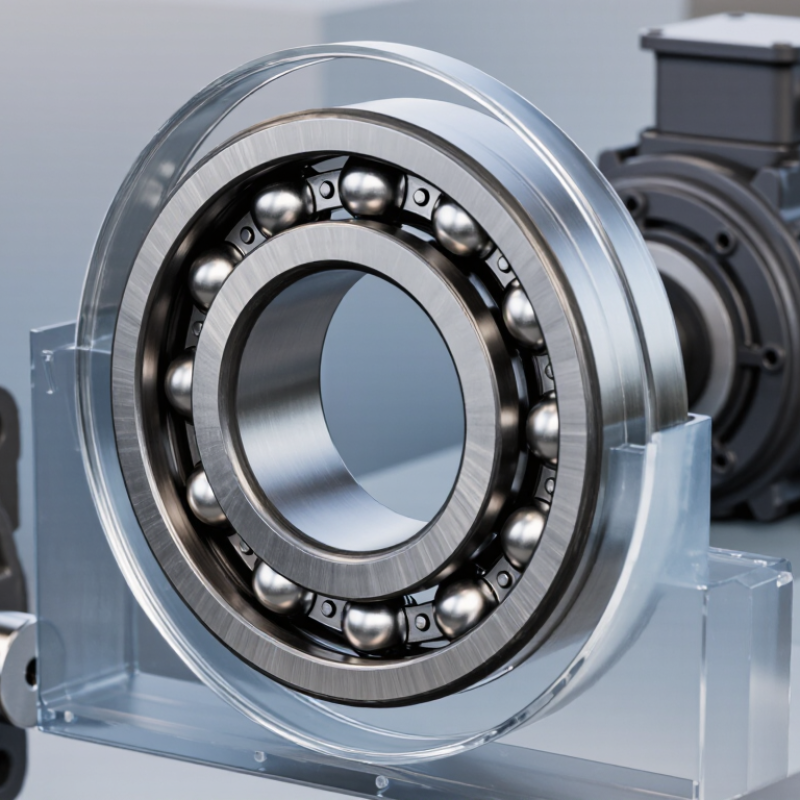
Contact ball bearings are commonly understood as angular-contact ball bearings. Their inner and outer raceways are shaped to meet the balls at a defined angle. That angle matters. It lets the bearing carry radial loads, which act across the shaft, alongside axial loads, which push along it.
A single-row design generally carries axial load in one direction. Install two bearings in a suitable pair, and the arrangement can support axial loads in both directions. The balls roll between the rings, reducing friction compared with sliding contact. Still, they need proper lubrication and a suitable fit. Too much preload can create heat; too little may allow unwanted movement.
You can find these bearings in pumps, machine-tool spindles, and other rotating equipment. In practice, choosing one means checking load direction, operating speed, temperature, and available space. A bearing that fits on paper may perform poorly if alignment or lubrication is overlooked. The terminology can also be imprecise: product descriptions may use “contact ball bearing” loosely, so confirm the contact angle and bearing arrangement before specifying a part.
How Do Contact Ball Bearings Work?
Contact ball bearings guide rotating shafts by keeping balls between an inner and an outer raceway. As the shaft turns, the balls roll along these curved tracks rather than sliding across them. Under load, each ball forms a tiny elliptical contact area with the raceways. Small motions matter.
In an angular-contact design, the raceways meet the balls at a set contact angle. This lets the bearing support radial forces and axial forces, such as thrust pushing along the shaft. The angle and bearing arrangement affect how much load it can carry in each direction. A cage keeps the balls spaced apart; it does not carry the main load.
Lubricant forms a thin film between the rolling surfaces, helping limit friction, heat, and wear. Too little lubricant can leave surfaces rubbing; too much can also raise operating temperature. The explanation is tidy, but real assemblies are not. Shaft alignment, fit, speed, and preload all change how a bearing behaves. A faint increase in noise or warmth can be an early sign that conditions need checking.
Why Choose Contact Ball Bearings?
How contact angle affects radial and axial load components
A contact ball bearing transfers load along the line of contact between each ball and its raceways. For the same 100 N contact force, the radial component is 100 × cos(angle), while the axial component is 100 × sin(angle). A larger contact angle increases the axial component and decreases the radial component. These values illustrate force geometry; actual bearing capacity depends on the bearing design and operating conditions.
What Types of Loads Can They Support?
Contact ball bearings can carry radial loads, which act perpendicular to the shaft, and axial loads, which act along it. The exact mix depends on bearing design. Deep-groove types generally handle radial force and modest axial force in either direction. Angular-contact designs are better suited to combined loads, but typically support axial force mainly in one direction. Paired bearings can support axial loads in both directions. The contact angle matters.
Load capacity is not just a catalog number. ISO 281:2007 defines basic rating life using L10 = (C/P)³ million revolutions for ball bearings, where C is the basic dynamic load rating and P is equivalent dynamic load. L10 represents a life reached or exceeded by 90% of a sufficiently large group of identical bearings under specified conditions. Real installations vary. Misalignment, contamination, lubrication, and shock loads can shorten service life.
A practical check starts with the load direction and its changes during operation. A conveyor roller may face steady radial force, then brief axial force when the belt tracks sideways. That detail is easy to overlook. ISO 76:2006 addresses static load ratings and permanent deformation, so slow-moving or stationary applications need a separate static check. Rating formulas help compare options; they do not predict every rough start or imperfect fit.
Where Are Contact Ball Bearings Commonly Used?
Contact ball bearings are commonly used wherever rotating parts must carry radial loads and, depending on their design, axial loads. In electric motors, they support shafts while helping maintain smooth rotation at operating speeds. Pumps use them to steady impellers and reduce friction around rotating shafts. In machine tools, carefully selected bearings help spindles run accurately under changing loads. Small differences matter.
You can also find them in vehicle wheel assemblies, gearboxes, compressors, and industrial conveyors. A bearing in a conveyor may face dust and repeated starts, while one in a precision spindle may need low vibration and tight running accuracy. The right choice depends on load direction, speed, temperature, lubrication, and mounting conditions. Specifications are useful, but real installations are rarely as tidy as a chart suggests. Misalignment or poor lubrication can shorten service life, even when the bearing itself is well made. Checking the shaft fit, housing, and maintenance schedule is part of choosing a suitable application.
What Benefits and Selection Factors Should You Consider?
Angular-contact ball bearings suit applications where radial loads arrive with meaningful axial force, such as a spindle turning under cutting pressure. Their contact angle helps determine how much axial load they can support, while paired arrangements can handle force in both directions. The trade-off is real: higher speed, heat, and preload can make an otherwise suitable bearing run poorly.
Selection starts with load direction, speed, required life, and available space. ISO 281:2007 defines basic rating life, L10, as the life that 90% of a sufficiently large group of identical bearings are expected to reach or exceed under specified conditions. That is a statistical rating, not a promise for every machine. Lubrication, contamination, alignment, and mounting can change actual service life. Small details matter.
Check static loads too. ISO 76:2006 bases the basic static load rating on a limited permanent deformation of about 0.0001 times the rolling-element diameter at the most heavily stressed contact. Compare this rating with peak loads, not just steady operation. Then verify fit, cage suitability, and whether a single bearing or matched pair meets the load direction. I still find one factor easy to underestimate: installation alignment. A slight error can raise noise and temperature, even when the catalogue calculations look sound.


