Why Is My Water Pump Not Working?

Why Is My Water Pump Not Working? That question often begins with a silent motor, a weak stream, or water pooling around a fitting. The fault may involve power, air leaks, blocked filters, worn impellers, or incorrect pressure settings. A Water Pump rarely fails without warning. Small changes usually appear first.

The U.S. Department of Energy reports that pumping systems can represent a major share of industrial motor energy use, especially when pumps operate far from their best efficiency point. The Hydraulic Institute also stresses that pump performance depends on the complete system, including pipes, valves, controls, and water demand. As Michael Michaud, former Hydraulic Institute president, has emphasized, “Pump performance depends on the entire system, not the pump alone.” That principle matters in homes, farms, buildings, and factories.

Listen carefully.

A rattling sound can indicate cavitation or trapped air. A hot motor may suggest overload, poor ventilation, or repeated restarting. No water flow can point toward a closed valve, damaged check valve, or clogged intake screen. The World Health Organization links reliable water services with public health, making prompt diagnosis more than a maintenance concern. Still, this guide has limits. A visual inspection cannot reveal every electrical or internal mechanical fault. I have seen pumps blamed for failures caused by undersized pipes and loose wiring. This is easy to miss. The following outline examines practical symptoms, safe checks, pressure readings, common repair decisions, and situations requiring a qualified technician.
Why Is My Water Pump Not Working?

Common Symptoms of a Water Pump Failure

A failing engine water pump often leaves clues before the temperature gauge reaches the red zone. Watch for coolant dripping near the pump, a sweet smell after parking, or a rough whirring sound from the belt area. Some leaks appear only when the engine is warm. A loose belt or damaged hose can look similar, so the stain alone is not proof.

Temperature swings matter. The gauge may climb in traffic, then fall when the car moves. Weak cabin heat can also signal poor coolant circulation. Stop driving if the engine overheats; repeated overheating can cause serious engine damage. The U.S. Department of Energy’s Improving Pumping System Performance sourcebook estimates that pumping systems use nearly 20% of global electricity demand. That figure covers pumps broadly, not automotive failure rates, but it reinforces why reliable circulation matters. Symptoms are imperfect evidence. A mechanic can check for shaft play, leaks, belt condition, and coolant flow before replacing parts.
How to Check the Power Supply and Electrical Connections

Start at the breaker. Confirm it has not tripped, then check the pump’s disconnect switch and any ground-fault protection. A tripped breaker may signal overload or a fault, not merely a temporary glitch. Reset it only once; if it trips again, stop and call a qualified electrician.

With power isolated, inspect the cable, plug, and accessible terminals for cuts, corrosion, loose fittings, or a hot-plastic smell. Never open an energized electrical enclosure. If you are trained to use a meter, compare the supply voltage with the pump’s nameplate rating. NEMA MG 1 allows many motors to operate at rated load within 10% of rated voltage, but that is not a reason to ignore persistent low voltage or imbalance. The U.S. Department of Energy’s Improving Pumping System Performance sourcebook estimates that pumping systems use nearly 20% of global electricity demand, making sound diagnosis more than a convenience. A loose connection can look harmless. That part is easy to underestimate. Keep the pump off if wiring is wet or damaged, and have a professional test the circuit before restarting it.

How to Inspect the Pump, Pipes, and Water Source

Why Is My Water Pump Not Working?
How to Inspect the Pump, Pipes, and Water Source

When a pump runs but water barely reaches the tap, inspect the whole system. Check whether the water source has enough water and whether its inlet is submerged as required. Look for a closed valve, a clogged intake screen, or debris near the pickup. A pump that runs dry can overheat, so switch it off if the source is empty. Listen, too. A steady hum differs from repeated clicking or silence, which may point to a control or power issue. Keep electrical covers closed, and ask a qualified technician to inspect wiring.

Tips: Turn off power before examining accessible pipes. Check for wet joints, kinks, or crushed sections. A small leak can admit air and weaken suction, even when the floor looks mostly dry. Tighten fittings only if the manufacturer’s instructions allow it.

If the source, valves, and visible pipes seem clear, note when the problem occurs: only at certain taps, after heavy use, or all the time. That detail helps narrow the cause. I might be tempted to blame the pump first, but a blocked filter or low source level can look much the same. Don’t open a sealed pump housing or keep resetting a tripping breaker. Stop if you notice burning smells, unusual heat, or persistent leaks, and have a professional check the system.

How to Test the Pressure System and Control Components

Why Is My Water Pump Not Working?

A pump that stays silent or runs without building pressure may have a control problem, not a failed motor. Start with the pressure gauge. With taps closed, note whether pressure rises, falls, or barely moves. A stuck or damaged gauge can mislead you, so compare its reading with the water flow at a nearby tap. Small details matter.

Check the pressure switch only with power disconnected. Look for moisture, corrosion, loose tubing, or debris around its pressure-sensing opening. Do not touch electrical contacts; they can remain hazardous. If wiring looks damaged, stop and call a qualified technician. Not worth guessing. A switch that fails to close may prevent startup, while one that stays closed can make the pump run too long.

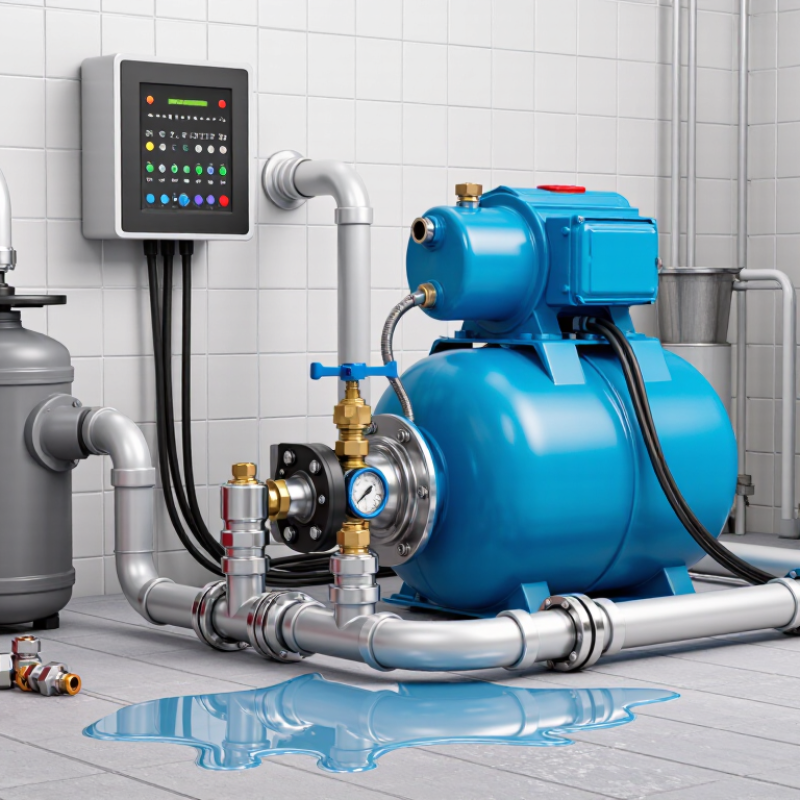
The pressure tank deserves a careful check, too. Turn off power, drain the system, then measure air pressure at the tank’s valve. Compare it with the pump’s specified setting; do not assume every system uses the same value. A waterlogged tank may cause rapid on-and-off cycling. That sound is easy to dismiss, but repeated cycling can strain components. If pressure readings seem inconsistent, pause and reconsider the gauge before replacing parts.

When to Repair the Pump or Call a Professional

A water pump that will not start may have a simple cause, but the symptoms can be misleading. Check whether the power supply is on and whether a nearby switch was turned off accidentally. Look for a closed valve, a visibly clogged inlet screen, or a kinked hose. Never touch wiring or controls with wet hands. Stop there if water is near electrical parts.

If the pump starts but delivers weak flow, note any sputtering, unusual vibration, or pressure changes. A blocked intake or loose connection may be manageable if the equipment is unplugged and the manual explains the task. Clean only accessible filters, and use the correct replacement seals. Small leaks can become bigger problems. It is easy to blame the pump when a valve or pressure tank is actually at fault, so avoid replacing parts based on guesswork.

Call a qualified pump technician if a breaker trips repeatedly, the motor smells burnt, the casing is hot, or water leaks into the electrical compartment. Persistent cycling, grinding noises, and loss of prime also deserve professional diagnosis. Do not keep resetting a breaker or running a dry pump; either can cause further damage. Share when the trouble began and what sounds or leaks you noticed. Those details help narrow the cause, though they may not tell the whole story.

Why Is My Water Pump Not Working? — When to Repair the Pump or Call a Professional

Use these common symptoms to identify safe first checks and decide when professional service is appropriate. Always follow the pump manual and shut off power before inspecting electrical components.

Symptom Possible cause Safe first check Recommended action When to call a professional
Pump does not start Tripped breaker, disconnected power, pressure switch issue, or motor fault Check that the pump is plugged in and inspect the breaker once. Look for visible damage without opening electrical covers. Restore power only if the cause is clear and there are no signs of damage or water exposure. The breaker trips again, wiring is damaged, or the pump remains silent despite a working power supply.
Pump runs but little or no water comes out Low water source, clogged intake or filter, loss of prime, or a closed valve Confirm the water source is available and accessible valves are open. Check and clean an external filter if the manual permits. Follow the manufacturer’s priming instructions for a pump designed to be primed; do not run it dry. Priming does not restore flow, the intake may be blocked below ground, or the water source level has changed.
Pump starts and stops frequently Leaking plumbing, incorrect pressure settings, a waterlogged pressure tank, or a faulty switch Look for dripping taps, running toilets, or visible leaks. Note how often the pump cycles. Repair an obvious fixture leak. Avoid adjusting pressure controls unless the system instructions specify how. Cycling continues with no obvious leak, or the pressure tank or switch needs testing or adjustment.
Pump is unusually noisy or vibrates Loose mounting, air in the line, cavitation, worn bearings, or debris Check for loose external supports and note whether noise began after a change in water supply or flow. Stop the pump if the noise is severe, it is overheating, or there is a burning smell. Noise persists, the pump shakes, or internal parts may be worn or obstructed.
Water pressure is weak or inconsistent Clogged filter, leak, partially closed valve, worn pump, or pressure-control problem Check whether the problem affects one fixture or the whole system. Inspect accessible filters and valves. Clean a serviceable filter according to its instructions and monitor pressure afterward. Low pressure affects the whole system or continues after basic checks.
Water leaks near the pump Loose connection, failed seal, cracked fitting, or corrosion Identify where water is coming from without touching wet electrical parts. Check whether the leak is worsening. Shut off the pump if water is reaching electrical components or the leak is substantial. A seal, housing, pipe connection, or pressure vessel needs repair or replacement.

Safety note: Do not work on live wiring, open a pressurized system, or run a pump without water when it requires water for cooling. If you are unsure, switch off power at the breaker and contact a qualified pump technician.