How to Choose a Ground Source Heat Pump?
Choosing a Ground Source Heat Pump is less about buying the most powerful unit and more about matching a system to your property. A well-designed system can provide steady heating, but its performance depends on insulation, heat emitters, ground conditions, and installation quality. Small details matter. A narrow garden, buried services, or difficult access may affect which ground loop is practical. Your home’s heating schedule matters, too.
This guide outlines how to compare system types, estimate your home’s heating demand, and assess whether horizontal or borehole loops suit your site. It also explains what to look for in a professional survey, including a room-by-room heat-loss calculation and clear assumptions about energy use. Ask installers to explain expected seasonal efficiency, maintenance needs, and how the system will work with your existing radiators or underfloor heating. Get itemized quotes. Look beyond the headline price.
There is no single best choice for every home. A promising estimate can still miss important site constraints, and even careful projections involve uncertainty. That deserves a second look. Use the guidance here to ask specific questions, compare like-for-like proposals, and make a decision based on evidence rather than broad promises.
Understand Ground-Source Heat Pumps: Typical Heating COPs Range from 3 to 5
How to Choose a Ground Source Heat Pump?
A ground-source heat pump’s heating COP shows how much heat it delivers for each unit of electricity used. With a COP of 4, for example, four kilowatt-hours of heat are produced per kilowatt-hour of electricity. The extra heat comes from the ground, not from electricity alone. Typical heating COPs range from 3 to 5, but this is a guide, not a promise.
A stated COP is measured under specific conditions. In a real home, performance depends on ground-loop design, soil conditions, water temperature, and the heat distribution system. Lower-temperature radiant floors can help a system run efficiently. High-temperature radiators may require more work from the heat pump. That matters. Ask whether quoted figures include circulation pumps and backup heating, and compare seasonal performance estimates as well as test ratings.
Sizing and installation deserve equal attention. An undersized loop may cool the surrounding ground over time, while an oversized system can add avoidable cost. I would not choose equipment by COP alone. Request a heat-loss calculation, details about local ground conditions, and an estimate based on your home’s likely water temperatures. The neat number can get messy. A carefully designed system may be more valuable than a higher advertised rating.
How to Choose a Ground Source Heat Pump? — Understand Ground-Source Heat Pumps: Typical Heating COPs Range from 3 to 5
| Selection Factor |
Typical Data or Range |
What It Means When Choosing a System |
| Heating COP |
Typically about 3 to 5 at specified operating and test conditions. |
COP is the heat delivered divided by the electricity used at that moment. A COP of 4 means approximately 4 units of heat are delivered for each unit of electricity consumed by the equipment within the stated test boundary. |
| COP and test conditions |
A rated COP is tied to defined source-side and heating-side temperatures and a particular test procedure. |
Compare products using the same rating standard and operating conditions. A published COP is not a guarantee of the COP the system will achieve in every home or climate. |
| Source and delivery temperatures |
In general, warmer ground-loop fluid and lower heating-water supply temperatures support higher heat-pump efficiency. |
Check the expected loop-fluid temperatures and the temperature required by the building’s emitters. Floor heating and other low-temperature systems can be a good match; systems requiring hotter water may reduce efficiency. |
| Seasonal performance |
Seasonal performance reflects operation over changing outdoor, ground-loop, and building conditions rather than a single test point. |
Ask for a seasonal estimate suited to the local climate and the proposed system design. Confirm whether pumps, controls, backup heat, and other auxiliary electricity are included in the calculation. |
| Closed-loop options |
Common arrangements include horizontal loops, vertical boreholes, and submerged loops where a suitable water body is available. |
Site area, geology, excavation or drilling access, permitting, and installation cost usually determine which arrangement is practical. Loop type alone does not establish the system’s COP. |
| Groundwater systems |
Open-loop systems use groundwater directly as a heat source or sink, subject to local water quality and regulations. |
Assess water availability, chemistry, discharge or reinjection requirements, maintenance needs, and pumping electricity. The heat-pump unit’s COP may not represent the performance of the complete system. |
| Building heat demand |
Required capacity depends on the building’s heat loss, climate, insulation, air leakage, and desired indoor temperature. |
Use a professional heat-loss calculation and system design. Oversizing or undersizing can affect comfort, operating behavior, backup-heat use, and overall energy consumption. |
| Backup heating |
Some systems include auxiliary heat for peak loads or unusual operating conditions. |
Ask when backup heat is expected to operate and how its electricity use is reflected in annual energy estimates, since it can affect whole-system seasonal performance. |
Note: COP is a ratio, not a percentage. Actual performance varies with equipment, installation, loop design, source and supply temperatures, controls, and operating conditions. Request comparable certified ratings and a site-specific seasonal estimate.
Assess Building Heat Loss and Site Conditions Before Sizing the System
A ground-source heat pump should be sized from the building’s heat loss, not simply its floor area. A careful assessment considers insulation, window quality, air leakage, and the coldest local design temperature. Check each room, too: a draughty north-facing bedroom may need more heat than a sheltered interior space. Small details matter. Measure, don’t guess. If the home has recently gained insulation or new windows, use its current condition rather than an old heating bill alone.
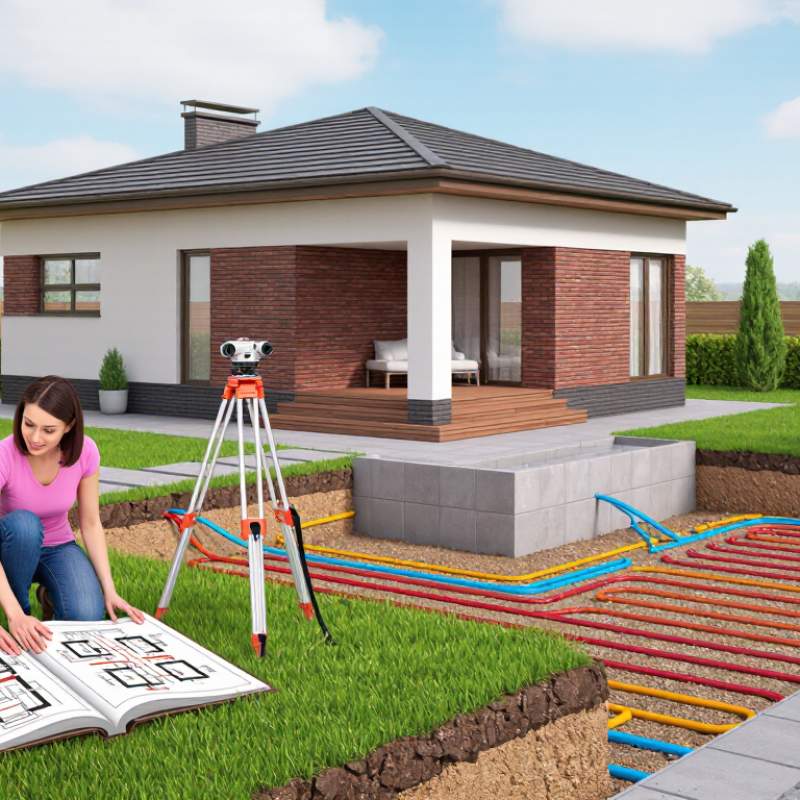
Site conditions shape the ground loop and can change installation costs. A horizontal loop needs enough clear land for trenches, away from trees, buried services, and future building plans. A vertical borehole uses less surface area, but drilling access and ground structure matter. Soil type, rock layers, groundwater, and moisture affect how readily the ground transfers heat. A neat garden plan is not a geological survey. That matters.
Ask a qualified designer to review the heat-loss calculation and site information before choosing equipment capacity. Oversizing can lead to short cycling and unnecessary expense; undersizing may leave rooms struggling during cold weather. The right balance depends on both the building and the ground. Some site data may be uncertain, and that uncertainty should be stated rather than hidden. If drilling records or soil details are unavailable, further investigation may be worthwhile before final sizing.
Compare Loop Options: Vertical Boreholes, Horizontal Trenches, and Ponds
How to Choose a Ground Source Heat Pump?
The right ground loop depends on your land, soil, and heating demand. Vertical boreholes use deep, narrow holes, so they suit smaller gardens or sites with limited open space. Drilling can reach stable ground temperatures, but access for a drilling rig matters. Expect noise and temporary disruption. Local ground conditions can also change drilling costs.
Horizontal trenches need more surface area. Pipes are usually laid in broad, shallow loops, so a clear yard or field helps. Excavation may be simpler than drilling where soil is workable, but rocky ground can slow the job. Keep future sheds, trees, and paving in mind; disturbing the loop later can be costly. I have seen tidy plans overlook where a garden will actually be used.
A pond loop places sealed pipe coils underwater. It can be practical when a suitable pond is close to the building, but water depth, seasonal levels, and pond area affect performance. The pond must remain deep enough around the coils, even in colder weather. Not every pond qualifies. Ask a qualified designer to assess heat loss, soil or water conditions, and installation access before comparing quotes. A site visit often reveals details that a map misses.
How to Choose a Ground Source Heat Pump?
Compare Loop Options: Vertical Boreholes, Horizontal Trenches, and Ponds
Typical placement depths vary by site and system design: horizontal trenches are often about 4–6 ft deep, pond loops are commonly placed about 8–10 ft below the water surface, and vertical boreholes often extend about 100–400 ft. The logarithmic scale makes these different ranges easier to compare. Actual requirements depend on soil, climate, heating and cooling loads, and local regulations.
Check Equipment Ratings: Heating COP and Cooling EER at Standard Test Conditions
When comparing ground source heat pumps, read heating COP and cooling EER together. COP measures heat delivered divided by electricity used. A COP of 4 means about four units of heat per unit of electrical energy under the stated test conditions. EER measures cooling capacity in British thermal units per hour per watt. Higher values indicate better rated efficiency, but only when the products are tested under comparable conditions.
Look closely at the conditions printed beside each rating. Entering water temperature, indoor temperature, flow rate, and the applicable test standard can affect results. A rating from one set of conditions may not compare fairly with a rating from another. Standard tests provide a useful baseline, not a promise of household performance. Your loop temperature can change through the season, and circulation pumps also use electricity. Small details matter.
Check the technical submittal or independent certification for the exact test points, not just a headline number. Ask whether reported performance includes the pumps and fans relevant to your system. A higher COP or EER may still be a poor fit if the equipment is oversized or mismatched to the building. I would not choose from ratings alone; they are helpful, but they leave some real-world questions unanswered.
Compare Lifecycle Costs: Ground Loops Can Last 50+ Years, Heat Pumps 20+ Years
How to Choose a Ground Source Heat Pump?
A ground-source system is a long-term investment, so compare more than its purchase price. A properly designed ground loop can often serve for 50 years or longer. The heat-pump unit may need replacement after roughly 20 years. These are planning estimates, not guarantees. Soil conditions, installation quality, operating hours, and maintenance all matter. In some cases, the indoor equipment may be replaced while the buried loop remains in service.
Estimate costs across several decades. Include drilling or trenching, electrical work, routine servicing, and likely heat-pump replacement. Ask installers to explain what their lifecycle estimates include. A low upfront quote may omit difficult site access or future service costs. Keep the loop design and commissioning records for future technicians. Worth checking. Even careful estimates can miss something, and energy prices may change over time.
Tips: Compare bids using the same service-life assumptions and energy rates. Request separate warranty details and replacement estimates for the loop and heat-pump unit. Check references for projects with similar soil and climate. Treat “50+ years” as a useful benchmark, not a promise.